RBI Action on Paytm Payments Bank
- The Reserve Bank of India cancelled the banking license of Paytm Payments Bank Limited on April 24, 2026 under Section 22(4) of the Banking Regulation Act, 1949.
- The regulator will approach the High Court to initiate winding-up proceedings, formally ending the bank’s operations.
- RBI said the bank has sufficient liquidity to repay all depositors, and customers can withdraw or transfer their funds.
- The action follows persistent compliance failures, including KYC deficiencies, governance concerns, and breach of licensing conditions.
- One97 Communications stated that Paytm’s core services such as UPI, app payments, and merchant devices will continue without disruption.
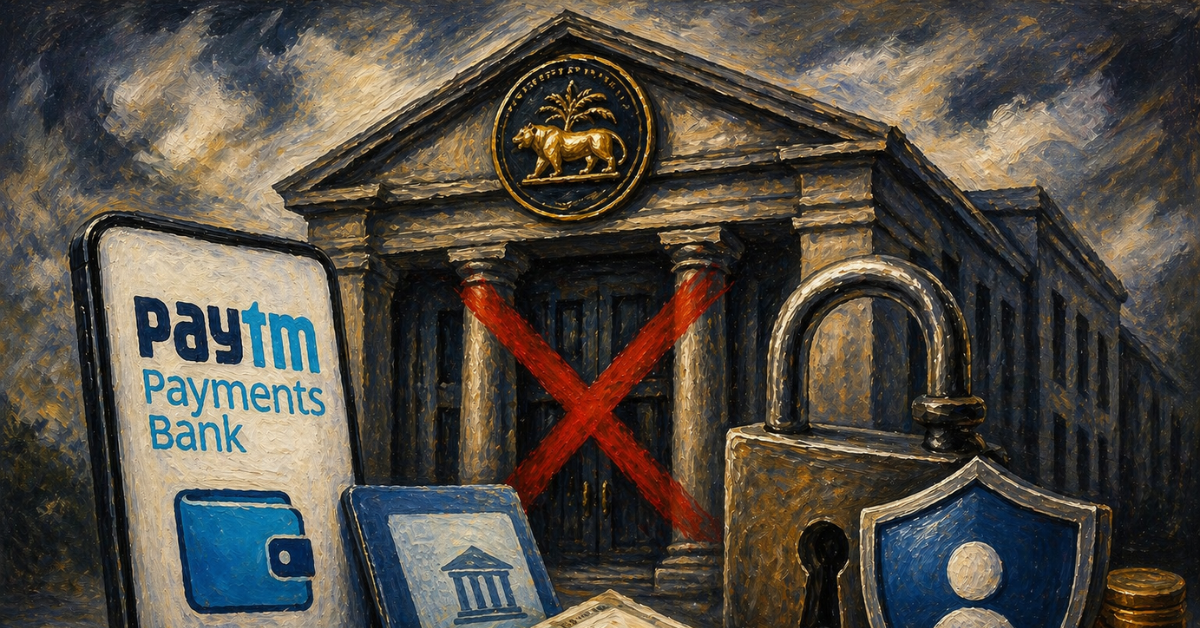
The Reserve Bank of India (RBI) on April 24, 2026 cancelled the banking license of Paytm Payments Bank Limited (PPBL), bringing to a close a multi-year regulatory action against the payments bank. The order, issued under Section 22(4) of the Banking Regulation Act, 1949, bars the entity from carrying on the business of banking with immediate effect, according to the regulator’s statement.
The central bank said it will approach the jurisdictional High Court to initiate the formal winding-up of the bank. The move follows a series of supervisory actions dating back to 2022, when the lender was first restricted from onboarding new customers, and tighter curbs imposed in early 2024.
Immediate Regulatory Action
The cancellation order prohibits PPBL from undertaking any banking activity or related specified business from the date of notification, a situation that echoes the recent OnePlus shutdown rumors regarding operational challenges in the tech industry. The RBI’s statement cited persistent non-compliance with licensing conditions and supervisory directions as the basis for the action, similar to the FCRA bill controversy.
Under the law, Section 22(4) empowers the regulator to cancel a banking license if a bank fails to comply with the conditions subject to which the license was granted, or if its affairs are conducted in a manner detrimental to depositors or public interest. The RBI said both thresholds had been met in this case, especially as India explores the introduction of polymer banknotes India.
The regulator added that it will file a petition before the High Court to commence winding-up proceedings, a step that typically leads to the appointment of a liquidator and a structured process for settling liabilities.
Depositor Protection and Liquidity Position
Both the RBI and PPBL said customer funds remain safe. The regulator stated that the bank has sufficient liquidity to meet its deposit liabilities in full, according to its assessment.
Customers will be able to withdraw or transfer balances held across savings and current accounts, wallets, FASTags and National Common Mobility Cards. The detailed mechanics and timelines for refunds and account closures are expected to be set out as part of the court-supervised winding-up process.
The RBI did not disclose a specific schedule for the disbursal process but indicated that depositors would have access to their funds in accordance with the legal framework governing liquidation.
Separation from Parent Operations
One97 Communications, which operates the Paytm brand, said its consumer-facing services will continue without interruption. The company stated that the Paytm app, UPI payments, QR-based merchant transactions, soundboxes and card machines are not dependent on PPBL for ongoing operations.
The parent had already begun unwinding operational dependencies between its payments business and the bank during 2024, after the RBI imposed restrictions on fresh deposits and top-ups. Industry participants had since shifted settlement arrangements to public sector banks, reducing reliance on the payments bank structure.
Basis for Cancellation
In its statement, the RBI cited multiple areas of concern identified over successive supervisory reviews and audits.
These included deficiencies in Know Your Customer processes and controls, raising concerns related to anti-money laundering compliance. The regulator also flagged issues in maintaining the required operational separation between the bank and its parent entity, a core condition under the payments bank licensing framework.
Further, the RBI said the conduct of the bank’s management was not aligned with the interests of depositors and the broader public. The statement described the bank’s operations as being carried out in a manner detrimental to its own stability and depositor interests.
Such findings, the regulator indicated, persisted despite repeated supervisory engagement and earlier enforcement actions.
Escalation of Regulatory Measures
The cancellation follows a phased tightening of restrictions over the past four years.
In March 2022, the RBI directed PPBL to stop onboarding new customers after supervisory concerns were identified. Subsequent inspections and compliance reviews led to additional constraints.
In early 2024, the regulator barred the bank from accepting new deposits or allowing top-ups in existing accounts, significantly curtailing its operating model. The latest action represents the final step after those measures failed to achieve full compliance.
Industry Context
Payments banks in India operate under a differentiated licensing regime designed to promote financial inclusion while limiting risk. They are permitted to accept deposits up to a prescribed limit but cannot extend credit, and are required to invest a large portion of deposits in safe government securities.
The model depends heavily on strict compliance with KYC norms, technology risk controls and a clear separation from affiliated entities engaged in non-banking activities. Regulatory scrutiny of such entities has increased in recent years as digital payments volumes have grown.
Data from the RBI has shown continued expansion in UPI-led transactions and merchant acceptance infrastructure, areas where Paytm remains an active participant through partnerships with other banks.
What Remains Unclear
The RBI has not yet detailed the precise timeline for court proceedings or the stages of liquidation. It is also not clear whether any penalties or further actions against management or associated entities could follow.
For customers, while assurances on liquidity have been provided, the operational process for transferring or closing accounts will depend on the court-approved framework.
For the broader market, the immediate impact appears contained, given the prior separation of Paytm’s core payments business from the bank. However, the case underscores the regulatory expectations placed on licensed financial entities operating within India’s digital payments ecosystem.
Next Steps in the Process
The High Court proceedings will determine the formal winding-up mechanism, including the appointment of an official liquidator and the sequencing of repayments to depositors.
Until then, the RBI’s directive remains in force, and PPBL will not be permitted to undertake any banking activity. The regulator said further updates will be issued as the process advances.