Kerala sees strong turnout as three-way contest heads to counting day
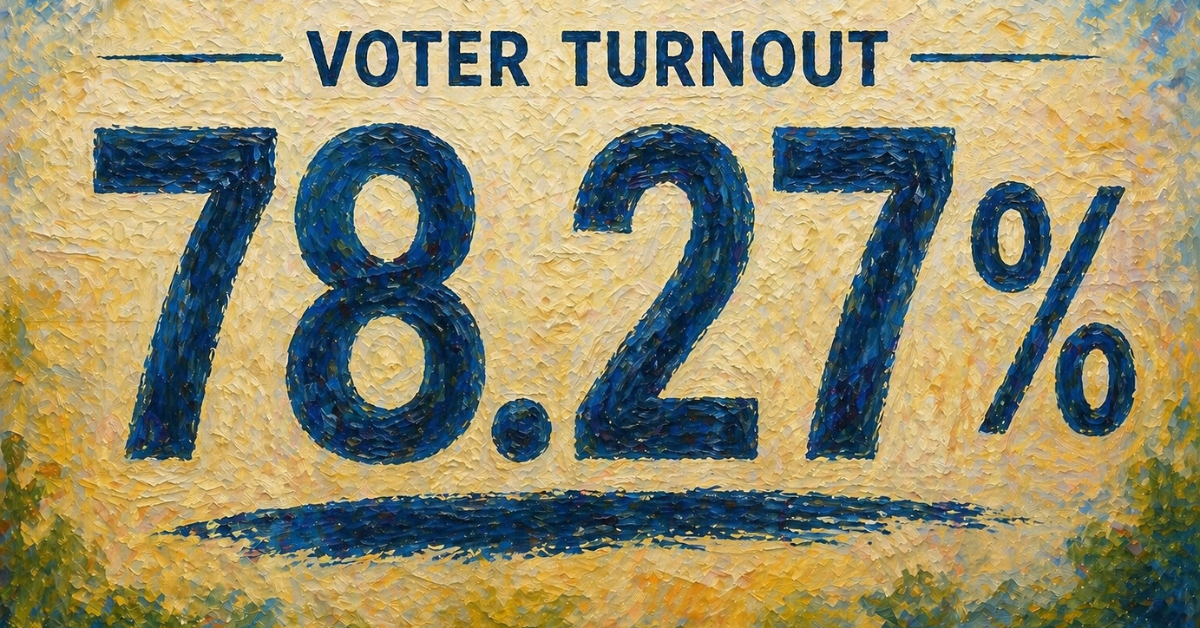
- Kerala recorded a provisional turnout of 78.27% in the 2026 Assembly elections
- Polling for all 140 constituencies was completed in a single phase on April 9
- Over 2.71 crore voters participated across more than 30,000 polling stations
- The contest remains centered on LDF, UDF and NDA alliances
- Results will be declared on May 4 alongside other states
Kerala recorded a provisional voter turnout of 78.27 percent in the 2026 Legislative Assembly elections, following single-phase polling held across all 140 constituencies on April 9. The results are scheduled to be announced on May 4.
The turnout figure marks an increase over the 2021 Assembly elections, when participation stood at just over 74 percent, continuing the state’s pattern of relatively high electoral engagement. Election officials indicated that the final percentage may undergo minor revisions after the completion of post-poll reconciliation processes.
The election was conducted across 30,471 polling stations, serving an electorate of approximately 2.71 crore voters. Polling began in the morning and continued through the day, with extended voting permitted in locations where queues remained at closing time.
District-level data indicates variations in participation across the state. Some districts recorded turnout exceeding 80 percent, while others remained closer to the 70 percent range. In several regions, queues persisted into the evening, reflecting sustained voter participation throughout polling hours.
The 2026 election is being closely watched as a test of Kerala’s long-standing political cycle, which has historically alternated between two dominant coalitions, with the Kerala election date 2026 marking a significant moment in this ongoing political narrative. The ruling Left Democratic Front, led by Chief Minister Pinarayi Vijayan of the Communist Party of India (Marxist), is seeking to retain power for a third consecutive term. Such an outcome would mark a departure from the state’s established pattern of electoral alternation.
The United Democratic Front, led by the Indian National Congress, has framed its campaign around governance concerns and anti-incumbency, aiming to return to power after a decade in opposition. The alliance continues to rely on its established support base across multiple regions.
The Bharatiya Janata Party-led National Democratic Alliance remains the third major force in the contest. While its legislative presence in the state has been limited, the alliance has attempted to expand its footprint by targeting urban voters and select constituencies.
Polling was conducted under extensive security arrangements across the state. The overall process was described as orderly, though isolated complaints related to procedures and voting logistics were reported and are subject to review.
More than 800 candidates contested the election across 140 constituencies, reflecting a broad political field that includes major parties and independent candidates. The electorate includes a near-balanced distribution of male and female voters, with participation among women remaining consistently strong.
With polling completed, electronic voting machines have been sealed and secured under the supervision of election authorities. The counting process on May 4 will determine whether the incumbent government retains power or whether the state returns to its traditional pattern of political change, with the Assam election 2026 results also being closely monitored.
Several factors remain uncertain ahead of the results, including the impact of turnout variations across districts, the strength of anti-incumbency sentiment, and the extent to which a third political force may influence the final distribution of seats.
| Event | Date | Status |
|---|---|---|
| Polling Day (All 140 seats) | April 9, 2026 | Completed |
| Counting Day | May 4, 2026 | Upcoming |