


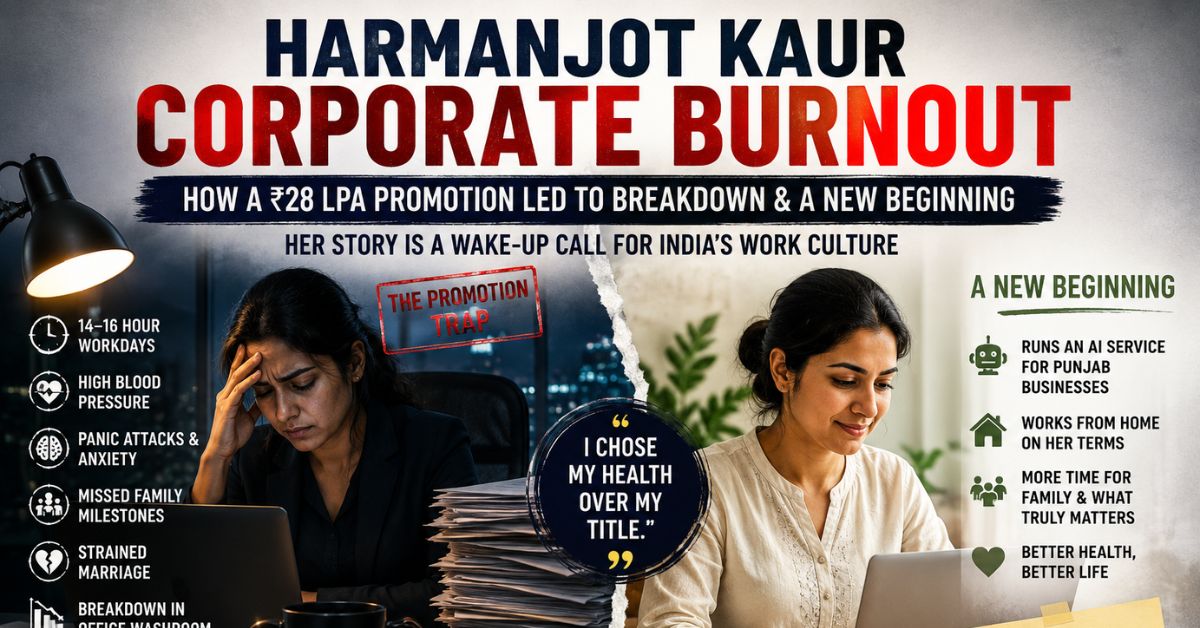
Harmanjot Kaur Corporate Burnout: Key Highlights
- Harmanjot Kaur’s story about corporate burnout went viral across LinkedIn and X
- After becoming a Senior Manager with a ₹28 LPA package, she reportedly faced 14–16 hour workdays
- Chronic stress allegedly caused panic attacks, high blood pressure, rising sugar levels, and emotional exhaustion
- She resigned in early 2026 without another job offer after suffering a breakdown inside her office washroom
- Harmanjot now runs a home-based AI services business for Punjab SMEs and says her health has improved significantly
The story of Harmanjot Kaur has become one of the most discussed workplace conversations in India this year. Her experience with corporate burnout, long working hours, panic attacks, and eventual resignation has struck a nerve with thousands of professionals across LinkedIn and X.
What made her story spread so quickly was not just the salary figure or the senior designation. It was the uncomfortable reality behind it. Many people saw their own lives reflected in her experience.
After spending eight years climbing the corporate ladder, Harmanjot finally reached the position she had dreamed about. She became a Senior Manager with an annual salary package of ₹28 lakh. For many professionals in India, that level of income is considered a major achievement. It often represents financial stability, social validation, and professional success.
But according to reports that went viral online this week, the promotion quickly became the beginning of a serious physical and emotional decline.
The Promotion That Changed Everything
For years, Harmanjot reportedly worked toward one goal. She wanted a senior leadership role inside the corporate world. The promotion finally arrived in late 2025 after years of persistence and performance.
At first, the achievement felt rewarding. She had a respected title, higher salary, and recognition from peers and management. Friends and family reportedly celebrated the milestone with her.
However, the reality behind the role became visible within months.
The expectations attached to the new position were far heavier than she anticipated. According to the viral account, her workdays soon stretched to 14 or even 16 hours regularly. Meetings began early and often continued late into the night. The pressure to remain constantly available became normal.
Instead of feeling successful, she reportedly began feeling trapped.
Many corporate employees online later described this as the “promotion trap.” The term refers to situations where career advancement brings financial growth but destroys personal time, physical health, and emotional stability.
When Work Stops Feeling Sustainable
One reason the story gained so much attention is because the symptoms Harmanjot described are familiar to many professionals working in high-pressure industries.
Her reported health problems included:
- High blood pressure
- Rising blood sugar levels
- Anxiety before meetings
- Panic attacks
- Sleep disruption
- Emotional exhaustion
These symptoms gradually became severe enough to affect daily life.
Corporate burnout often develops slowly. At first, employees believe the stress is temporary. They assume the workload will become manageable after adjustment. In many companies, overwork is even treated as proof of ambition or commitment.
But over time, continuous stress begins affecting concentration, emotional control, sleep quality, and physical health.
Mental health experts have repeatedly warned that chronic workplace stress can contribute to hypertension, anxiety disorders, depression, and cardiovascular risks. Long work hours also reduce recovery time, which makes burnout harder to reverse.
In Harmanjot’s case, the emotional impact extended beyond the office.
Missing Family Moments
One of the most emotional parts of the story involved her family life.
According to the widely shared account, Harmanjot missed important moments with her daughter because of work demands. One incident that particularly resonated online was missing her daughter’s first school function.
For many readers, this detail became the emotional center of the story.
Corporate success is often measured through salary packages, promotions, and designations. But personal memories, family events, and relationships rarely appear in performance reviews. Once missed, those moments cannot easily be recovered.
She also reportedly admitted that the stress started affecting her marriage and emotional well-being at home. Constant exhaustion left little room for meaningful personal time.
Many professionals responding online shared similar experiences. Some described missing anniversaries, birthdays, family gatherings, or even medical emergencies because of workplace expectations.
The conversation soon expanded beyond one individual story and became a larger discussion about modern corporate culture in India.
The Office Washroom Breakdown
Reports suggest the breaking point came roughly six months after her promotion.
After months of physical stress and emotional pressure, Harmanjot reportedly suffered a breakdown inside her office washroom.
That moment changed her priorities completely.
Within a week, she resigned from the company without securing another job offer first. This decision surprised many people because leaving a ₹28 LPA corporate position without a backup plan is considered financially risky.
But according to the story shared online, she reached a point where protecting her health mattered more than maintaining her salary or designation.
That decision became one of the most discussed aspects of the viral narrative.
In India’s competitive professional culture, employees are often encouraged to tolerate extreme pressure in exchange for career growth. Quitting without another offer is usually viewed as irresponsible or dangerous.
Yet many people online praised her decision because they saw it as an act of self-preservation.
Life After Corporate Burnout
After leaving the corporate sector, Harmanjot reportedly chose a very different lifestyle.
She now runs a small AI-focused business from home, helping Punjab-based businesses with automation and digital content services. Instead of managing large corporate teams, she shifted toward working with local SMEs and smaller clients.
The income from the venture is reportedly lower than her previous salary.
But according to the viral account, her quality of life improved significantly after leaving corporate work behind. She said her sleep patterns returned to normal and her anxiety symptoms reduced substantially.
More importantly, she regained time with her family.
This transition from corporate management to entrepreneurship became another major talking point online. Many readers said the story highlighted a growing shift among professionals who are reconsidering traditional definitions of success.
For some people, flexibility, peace of mind, and personal freedom are becoming more valuable than job titles or high salaries.
Why the Story Went Viral
The Harmanjot Kaur corporate burnout story spread rapidly because it arrived at a time when discussions around work-life balance are already increasing across India.
Several factors contributed to its popularity:
1. The Salary Figure
₹28 LPA is widely considered a high-paying corporate package in India. Many people spend years trying to reach that level.
The story challenged the assumption that higher salaries automatically lead to happiness or stability.
2. Relatable Work Culture
Many employees recognized the culture she described. Long hours, constant pressure, and unrealistic expectations are common complaints across consulting, tech, finance, and managerial roles.
3. Mental Health Awareness
Workplace mental health discussions are now more public than before. Employees are increasingly willing to talk openly about anxiety, burnout, and emotional exhaustion.
4. The Shift Toward Entrepreneurship
Her transition into a smaller independent business reflected a wider trend. Many professionals are exploring freelancing, consulting, remote work, or entrepreneurship after leaving traditional corporate structures.
The Larger Debate Around Hustle Culture
The story also reignited criticism of hustle culture.
For years, extreme work schedules were often celebrated online as signs of dedication and ambition. Working weekends, sleeping less, and staying constantly available became normalized in many industries.
But burnout stories like Harmanjot’s are changing that conversation.
Critics argue that companies often reward overwork in the short term while ignoring long-term health consequences. Employees may receive promotions and salary increases, but the emotional cost remains hidden until serious health problems emerge.
Supporters of workplace reform say companies need to rethink performance expectations, meeting culture, and employee well-being policies if they want to retain experienced talent.
The conversation is especially relevant in India’s fast-growing corporate sectors, where competition and workload pressures continue increasing.
Current Status in May 2026
As of May 2026, Harmanjot Kaur’s story continues circulating widely across social media and business discussions. She has become an example frequently referenced in conversations about burnout, work-life balance, and mental health in professional environments.
According to reports, many of her stress-related symptoms improved after leaving the corporate role and restructuring her daily life around family and independent work.
Her story has also encouraged many professionals to reconsider how they define success.
For some people, success still means climbing the corporate hierarchy and maximizing earnings. For others, it now includes emotional stability, physical health, personal freedom, and meaningful time with family.
That shift in thinking may explain why the phrase “Harmanjot Kaur Corporate Burnout” has resonated so strongly online in recent days.
Simple answer is
I only want everything then after some point I only made a mistake and I realised then I only recovered from the all my mess then I am the only hero