EPFO 3.0 Withdrawal Highlights
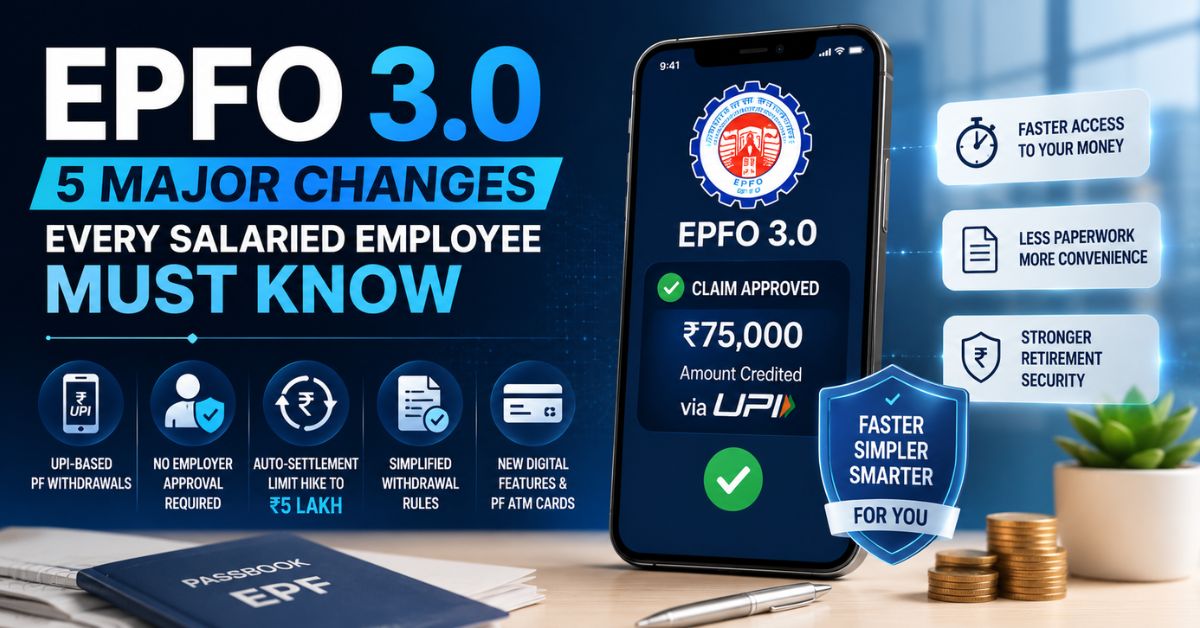
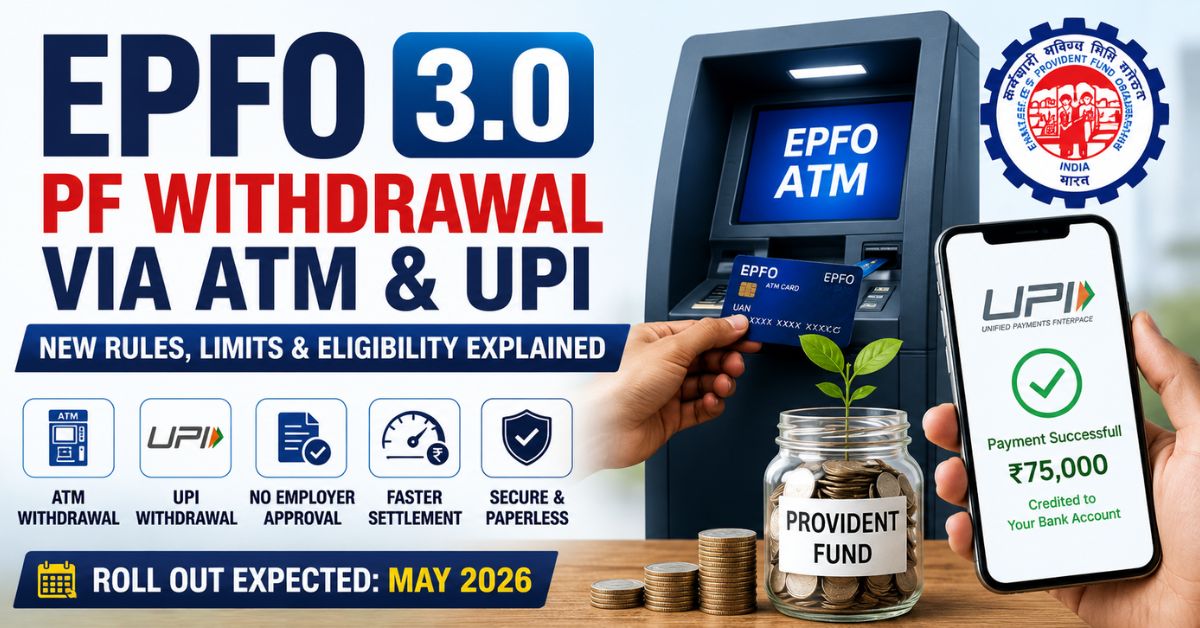
- EPFO 3.0 is expected to introduce ATM and UPI-based PF withdrawal facilities for faster and paperless access to provident fund savings.
- The upgraded system may allow eligible subscribers to withdraw up to 75 percent of their PF balance during emergencies or unemployment.
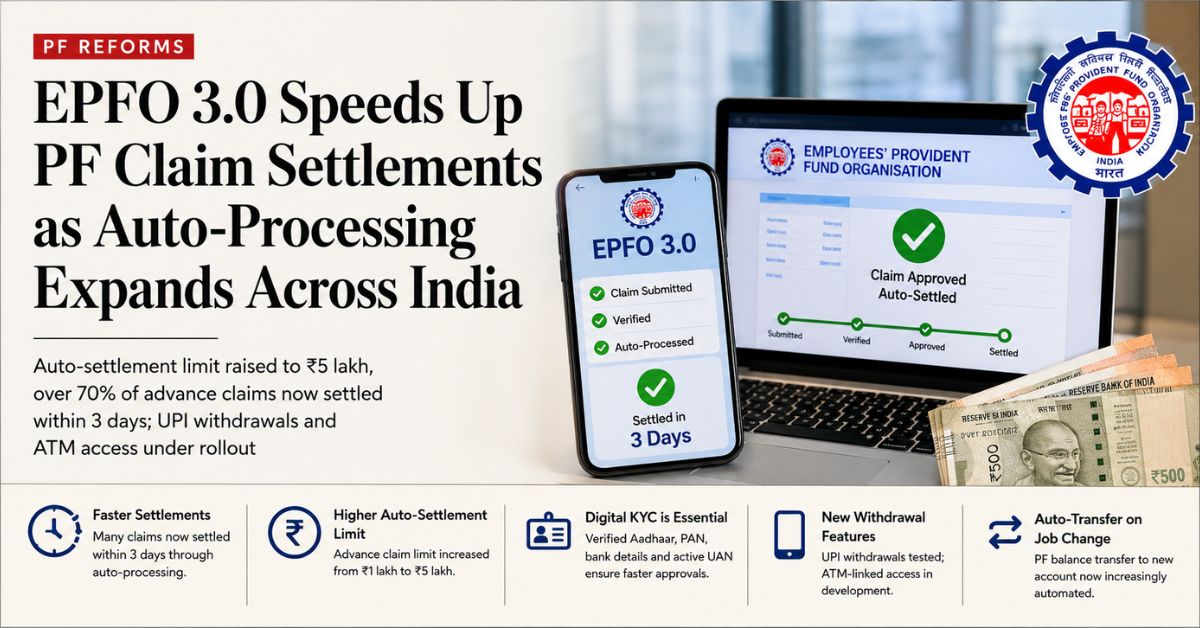
- EPFO has reportedly increased the automatic claim settlement limit from ₹1 lakh to ₹5 lakh for eligible advance claims.
- Aadhaar, PAN, bank account linking, and complete KYC will be mandatory for using the new digital withdrawal features, including the mAadhaar replacement.
- The new CITES 2.0 infrastructure aims to automate claim processing and reduce delays caused by manual verification, similar to the digipin rollout in India.
India’s retirement savings system is entering a major digital transition with the rollout of EPFO 3.0. The Employees’ Provident Fund Organisation is preparing to introduce ATM-based PF withdrawal and UPI-linked fund access, a move expected to change how salaried employees use their provident fund savings.
The new system is designed to reduce paperwork, speed up settlements, and remove several delays linked to traditional withdrawal processes. Instead of waiting for lengthy approvals, eligible subscribers may soon be able to access part of their PF balance through digital channels within hours.
Reports published in May 2026 indicate that the rollout has entered its final implementation stage, with backend testing and infrastructure upgrades nearing completion. The changes are expected to affect crores of EPFO subscribers across India.
What Is EPFO 3.0?
EPFO 3.0 is the organisation’s upcoming digital upgrade aimed at making PF accounts function more like modern banking platforms.
Under the current process, withdrawals often involve claim submissions, verification delays, and manual processing. The upgraded system is expected to simplify this through automation and Aadhaar-based authentication.
Key features expected under EPFO 3.0 include:
- PF withdrawal through ATMs
- UPI-linked instant transfers
- Aadhaar OTP-based self-verification
- Faster automated claim settlement
- Simplified withdrawal categories
- Automatic PF transfer after job changes
- Reduced employer dependency
The broader goal is to make provident fund access faster during emergencies while improving overall claim efficiency, similar to the changes seen in the CAPF Bill 2026 which aims for significant reforms.
EPFO ATM Withdrawal Facility
One of the biggest changes under EPFO Withdrawal 3.0 is the proposed ATM withdrawal feature.
Under this system, eligible subscribers may be able to withdraw PF money directly from EPFO-enabled ATMs using authentication methods similar to banking transactions.
The expected process includes:
- Visiting an EPFO-supported ATM
- Authenticating through PIN or OTP
- Entering UAN details
- Selecting the withdrawal amount
- Receiving funds instantly or within a short period
This facility is mainly aimed at emergency financial needs where employees require quick access to savings without waiting several days for claim settlement.
Reports also indicate that withdrawal limits may apply during the early rollout phase to reduce misuse and fraud risks.
UPI-Based PF Withdrawal
UPI integration is another major part of the EPFO 3.0 rollout.
Instead of relying entirely on traditional claim settlement methods, subscribers may soon be able to transfer eligible PF amounts directly into linked bank accounts using UPI.
The expected process is straightforward:
- Log in to the EPFO portal or application
- Select the withdrawal option
- Choose UPI as the payment method
- Enter the UPI ID
- Complete Aadhaar-linked verification
- Receive funds in the linked bank account
Several reports suggest the digital withdrawal system could become publicly available by the last week of May 2026 after final testing is completed.
Latest EPFO 3.0 Updates in May 2026
Recent developments indicate that the digital overhaul is now close to public rollout, similar to the situation with the RBI Paytm license.
Reports from ET Now, Hindustan Times, Business Today, and Livemint suggest EPFO is finalising the infrastructure required for faster digital settlements and self-service withdrawals.
Some of the most important updates include:
Auto-Settlement Limit Raised to ₹5 Lakh
The automatic claim settlement threshold has reportedly been increased from ₹1 lakh to ₹5 lakh for eligible advance claims.
This means many claims may be processed without manual intervention, allowing funds to reach users significantly faster than before.
Simplified Claim Categories
The earlier withdrawal structure included multiple claim categories that often created confusion for subscribers.
Under the revised system, these categories are expected to be reduced to three broad groups, making self-certification easier and improving processing speed.
CITES 2.0 Digital Upgrade
EPFO is also shifting to a new backend platform called CITES 2.0.
The system is expected to support:
- Real-time processing
- Automated verification
- Higher transaction capacity
- Faster grievance handling
Some reports mention a temporary online service interruption during the migration period as EPFO completes the transition.
New PF Withdrawal Limits and Conditions
While the upgraded system increases accessibility, EPFO is also introducing safeguards to protect long-term retirement savings.
Emergency Withdrawal Up to 75 Percent
Eligible subscribers may withdraw up to 75 percent of their accumulated PF balance under specific situations such as unemployment or urgent financial need.
Mandatory Minimum Balance
Subscribers are expected to maintain at least 25 percent of their PF balance in the account.
This rule is intended to prevent complete depletion of retirement savings at an early stage.
Initial Digital Transaction Caps
Reports indicate that ATM and UPI transactions could initially be restricted to a percentage of the available balance or fixed limits such as ₹25,000 per transaction during the early phase.
These restrictions are mainly intended to strengthen fraud protection systems.
EPFO Withdrawal Eligibility Rules
The updated system still follows existing eligibility principles for different withdrawal situations.
After One Month of Unemployment
Subscribers may be allowed to withdraw up to 75 percent of the PF balance after remaining unemployed for one month.
Full Settlement Rules
Complete PF withdrawal may continue to be allowed:
- After two months of unemployment
- After retirement at 58 years of age
Tax Rules on PF Withdrawal
Withdrawals after five years of continuous service generally remain tax-free.
However, early withdrawals exceeding ₹50,000 before completing five years of service may attract TDS under existing tax provisions.
Aadhaar and KYC Linking Are Essential
The new withdrawal system depends heavily on digital verification.
Subscribers must ensure the following details are correctly linked with their Universal Account Number:
- Aadhaar
- PAN
- Active mobile number
- Bank account details
Without updated KYC information, subscribers may not be able to access ATM or UPI withdrawal facilities once they become active.
One of the biggest operational changes under EPFO 3.0 is the reduced dependence on employer approval. Aadhaar OTP-based self-certification is expected to handle verification for many claims.
Automatic PF Transfer After Job Change
EPFO 3.0 is also expected to simplify PF account transfers after employment changes.
Currently, many employees manually initiate transfer requests after switching jobs. Under the upgraded system, PF balances may transfer automatically using Aadhaar-linked UAN records.
This could reduce inactive accounts and simplify account management for workers who frequently change employers.
EPS Pension Rule Changes
The reform package also includes changes linked to the Employees’ Pension Scheme.
According to recent reports, the waiting period for EPS withdrawal may increase substantially under the new rules.
The revised framework may require up to 36 months before pension-related withdrawal eligibility is activated in certain cases. Earlier rules allowed access after a much shorter duration.
The change is intended to strengthen long-term pension continuity, though it may also affect employees seeking quicker access during unemployment.
Education and Marriage Withdrawal Benefits
EPFO may also expand withdrawal flexibility for specific life events.
Reports suggest members could be allowed:
- Up to 10 education-related withdrawals during service
- Up to 5 marriage-related withdrawals during employment tenure
The proposal is aimed at allowing controlled use of PF savings without forcing complete account closure.
Why EPFO 3.0 Matters for Salaried Employees
For millions of salaried workers, PF savings often serve as a financial backup during unemployment, medical emergencies, or unexpected expenses.
The older withdrawal process frequently faced criticism because of:
- Delayed settlements
- Technical issues
- Complex procedures
- Employer-side dependency
- Slow grievance resolution
EPFO 3.0 attempts to address these issues through automation and faster digital processing.
If implemented successfully, the system could become one of India’s largest public-sector financial digitisation projects focused on employee savings access.
What Subscribers Should Do Before the Rollout
Employees who want to use the new facilities should verify their account details immediately.
Important steps include:
- Activate UAN
- Link Aadhaar with UAN
- Update PAN information
- Verify bank account details
- Ensure the mobile number is active
- Complete e-KYC on the EPFO portal
Subscribers with incomplete KYC records may face delays or ineligibility once the new withdrawal features become operational.
Is EPFO Withdrawal 3.0 Live in India?
As of May 2026, several reports suggest EPFO is in the final phase of testing and infrastructure deployment.
Some upgraded claim-processing systems are already active, while ATM and UPI-linked withdrawal features are expected to launch in phases shortly.
EPFO has not yet announced a single nationwide activation date for every feature. However, the organisation is clearly moving toward a faster, self-service model where provident fund access becomes more digital and less dependent on manual approval systems.
For crores of EPFO subscribers, EPFO Withdrawal 3.0 could become one of the most significant changes to provident fund access since the introduction of the UAN system in India.