


Key Takeaways
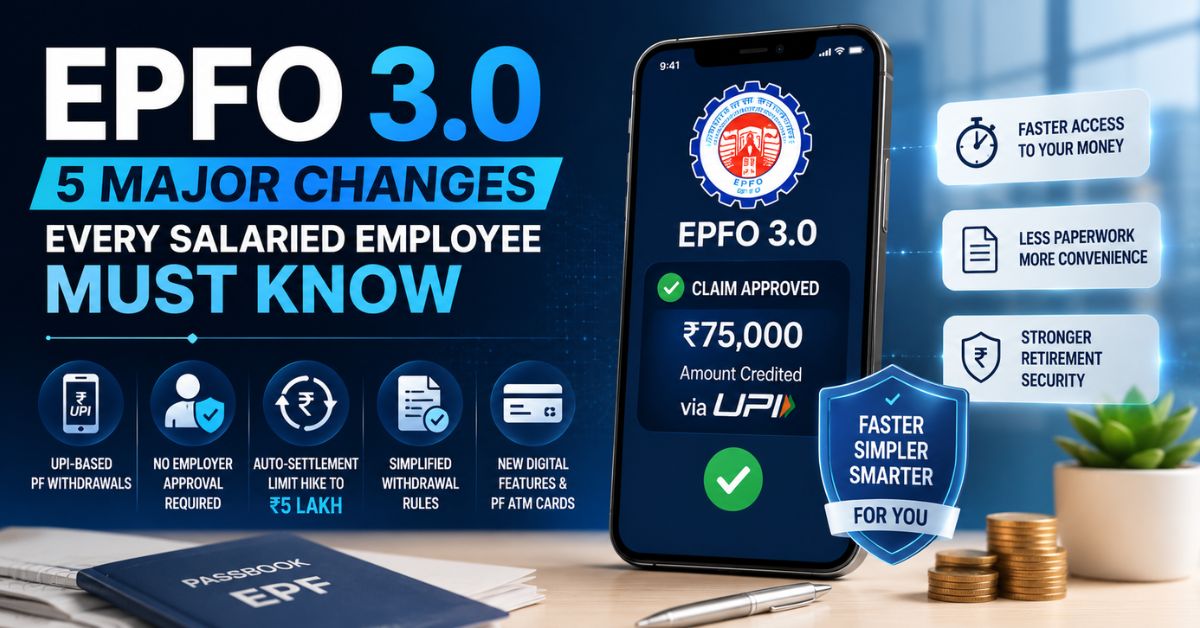
- EPFO 3.0 aims to modernize provident fund services through faster processing and improved digital access.
- UPI-based PF withdrawals are expected to make accessing eligible funds quicker and more convenient.
- The auto-settlement limit has increased from ₹1 lakh to ₹5 lakh, enabling faster claim approvals.
- EPFO is reducing dependence on employer approvals through Aadhaar-based verification systems.
- Employees should update their UAN, Aadhaar, PAN, and bank details to benefit from the new system.
For millions of salaried employees in India, the Employees’ Provident Fund (EPF) serves as one of the most important pillars of long-term financial security. Every month, a portion of an employee’s salary and an equal contribution from the employer are deposited into the EPF account, helping build a retirement corpus over time.
However, while EPF has remained a valuable savings tool, many members have often complained about lengthy claim processes, paperwork, employer dependency, and delays in accessing their own money.
That is where EPFO 3.0 comes in.
The Employees’ Provident Fund Organisation (EPFO) is undertaking a major modernization initiative aimed at making PF services faster, simpler, and more digital. The new framework focuses on reducing paperwork, speeding up claim settlements, improving digital access, and making provident fund management more convenient for members.
While some features are already being implemented and others are expected to roll out in phases, EPFO 3.0 could significantly change how employees interact with their PF accounts.
Here are the five major changes every salaried employee should understand.
1. UPI-Based PF Withdrawals Could Make Access to Funds Much Faster
One of the most talked-about developments under EPFO 3.0 is the introduction of UPI-based withdrawals.
Traditionally, withdrawing money from an EPF account required members to submit a claim, complete verification procedures, and wait several days or even weeks for funds to arrive. The proposed UPI integration aims to simplify this process significantly.
Under the new system, eligible members may be able to withdraw approved PF amounts directly through UPI-linked platforms. The objective is to reduce processing time and improve accessibility, especially during emergencies when quick access to funds is important.
Government officials have indicated that testing for UPI-based PF withdrawals has already been completed, and the feature is expected to become available after the necessary approvals and technical rollout.
For employees, this could mean faster access to money for medical needs, education expenses, housing requirements, and other approved withdrawal purposes.
Although several reports mention withdrawal limits and near-instant transfers, EPFO has not yet released detailed operational guidelines covering every aspect of the UPI withdrawal process.
2. Dependence on Employer Approval Is Being Reduced
For years, one of the biggest frustrations among EPF members was the need for employer verification during certain transactions.
Employees who changed jobs, left organizations under difficult circumstances, or faced delays from HR departments often found their PF-related requests stuck in processing.
EPFO 3.0 aims to address this issue through greater use of Aadhaar-based authentication and self-verification systems.
Instead of relying heavily on employer attestation, the organization is increasingly moving toward digital identity verification. When a member’s Aadhaar, bank account details, and EPF records are correctly linked and verified, many services can be processed with minimal employer involvement.
This shift is expected to make the system more employee-friendly while reducing administrative delays.
For salaried workers, the practical benefit is simple: greater control over their own PF accounts and fewer dependencies on former employers when filing eligible claims or updating account information.
3. Auto-Settlement Limit Has Increased to ₹5 Lakh
Among all the changes associated with EPFO 3.0, the increase in the auto-settlement limit is perhaps the most significant confirmed development.
Previously, automatic claim processing was available for claims up to ₹1 lakh. Claims above that amount often required additional review, increasing waiting periods.
The new framework raises the auto-settlement threshold to ₹5 lakh.
This means a much larger number of withdrawal requests can now be processed automatically without requiring manual scrutiny from EPFO officials.
The result is faster claim approvals and shorter waiting periods for members.
Auto-settlement works by using technology-driven verification systems that check claim details against existing records. If everything matches and the claim meets eligibility requirements, the request can be approved automatically.
The increase from ₹1 lakh to ₹5 lakh is expected to cover a large majority of genuine claims submitted by EPF members.
For employees facing medical emergencies, education expenses, marriage-related costs, or other approved needs, this change could significantly improve access to funds.
4. Withdrawal Rules Are Becoming Simpler and Easier to Understand
One common complaint among EPF members has been the complexity of withdrawal rules.
Over the years, different withdrawal categories, eligibility conditions, service requirements, and documentation requirements made the process difficult for many members to understand.
EPFO 3.0 aims to simplify the system by grouping withdrawals into broader categories that are easier to navigate.
| Category | Purpose | Examples |
|---|---|---|
| Essential Needs | Personal and family requirements | Medical emergencies, marriage, higher education |
| Housing Requirements | Property-related needs | Home purchase, land purchase, construction, renovation |
| Special Circumstances | Major life events | Unemployment, retirement, final settlement |
The streamlined structure is intended to reduce confusion and help members identify the correct withdrawal option more easily. To understand how these reforms could lead to faster EPFO claim settlements, employees should stay updated on the latest EPFO 3.0 developments.
5. New Digital Features Could Transform the Member Experience
Beyond faster claims and simplified withdrawals, EPFO 3.0 is expected to introduce several digital-first services aimed at improving user convenience.
One of the most discussed proposals involves PF-linked ATM access and enhanced digital withdrawal channels.
Various reports suggest that EPFO is exploring mechanisms that could allow members to access eligible PF funds more conveniently through banking infrastructure. If implemented, such features could further reduce dependence on traditional claim processes.
While several details are still awaiting formal notification, the broader goal is clear: create a more modern and user-friendly provident fund ecosystem.
The organization is focusing on paperless services, digital authentication, automated processing, and improved member accessibility.
For a generation that increasingly manages finances through smartphones and digital banking platforms, these changes could make PF services significantly easier to use.
How Employees Can Prepare Their PF Account for EPFO 3.0
Even as EPFO introduces new digital systems, members must ensure that their account information is accurate.
Most automated services rely on successful verification of identity and banking information. Any mismatch can result in delays, rejections, or additional verification requirements.
To prepare for EPFO 3.0 services, employees should review the following details:
Verify Your UAN
Ensure your Universal Account Number (UAN) is active and linked to a working mobile number capable of receiving OTPs.
Check Aadhaar and PAN Details
Your name, date of birth, and gender should match exactly across Aadhaar records, PAN records, and EPFO records. Even small differences can create verification issues.
Update Bank Account Information
Verify that your bank account is linked correctly to your UAN and that the account details remain current. This becomes particularly important if your bank has undergone a merger or changed its IFSC code.
Complete KYC Verification
Ensure all KYC requirements are completed and approved on the EPFO portal. A fully verified account is more likely to benefit from automated and faster processing systems.
What EPFO 3.0 Means for Salaried Employees
EPFO 3.0 represents one of the biggest modernization efforts in the history of India’s provident fund system.
The initiative is not simply about introducing new technology. It reflects a broader shift toward making PF services faster, more transparent, and more accessible for members.
UPI-based withdrawals, reduced employer dependency, higher auto-settlement limits, simplified withdrawal categories, and greater automation all point toward a future where employees can manage their retirement savings with far less friction than before.
While some features are still being rolled out and certain proposals await full implementation, the overall direction is clear. EPFO is moving toward a digital-first model that prioritizes convenience without compromising the long-term purpose of retirement savings.
For salaried employees, staying informed and keeping account records updated may be the best way to take full advantage of the changes as EPFO 3.0 continues to evolve.