Iran Moves to Regulate Strait of Hormuz, Raises Global Concerns
- Draft Approved: Iran’s parliamentary security committee has cleared a plan to regulate transit through the Strait of Hormuz.
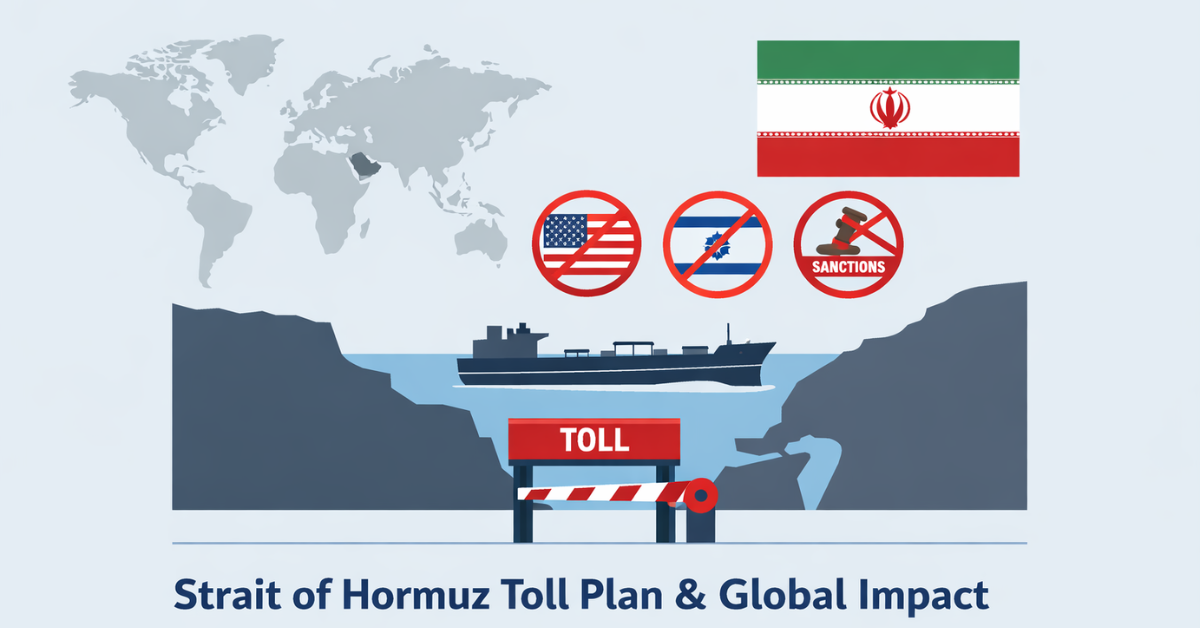
- Toll Proposal: The draft introduces a rial-based payment system for passing vessels.
- Selective Restrictions: Ships linked to the United States, Israel, and sanctioning nations may face bans.
- India’s Position: India has rejected the legality of such tolls and supports free navigation.
- Global Impact: Any enforcement could disrupt nearly 20% of global oil trade and trigger price volatility.
Iran has taken a significant procedural step toward asserting greater control over the Strait of Hormuz, as a key parliamentary committee approved a draft plan to regulate maritime transit through the critical waterway amid ongoing Hormuz Strait tensions. The development, reported by TASS, introduces proposals that include toll collection, selective vessel restrictions, and a broader governance framework.
What the Draft Plan Includes
The proposal outlines a structured approach to managing traffic through the strait, positioning Iran as a central authority in regulating passage.
Rial-Based Toll System: Merchant vessels transiting the strait may be required to pay fees in Iran’s national currency. Iranian officials have indicated that these funds would support maritime security, navigation systems, and environmental safeguards.
Restrictions on Specific Vessels: The draft includes provisions to deny access to ships linked to the United States and Israel, along with vessels from countries that enforce unilateral sanctions against Iran. While no official list has been released, this could extend to several Western nations.
Selective Access and “Friendly Nations”
Statements cited in TASS reporting suggest that Iran is already operating a form of selective maritime access amid ongoing tensions.
Countries described as “friendly” and reportedly allowed smoother passage include India, China, Russia, Pakistan, and Iraq. This reflects a shift toward politically filtered access, even before any formal legal framework is enacted.
Conflict with International Maritime Law
The proposal has drawn attention due to its potential conflict with established global maritime norms under the United Nations Convention on the Law of the Sea (UNCLOS).
Under UNCLOS, international straits such as Hormuz are subject to the principle of transit passage, which allows ships to pass freely without fees tied solely to transit. Iran, however, signed but did not ratify the convention, allowing it to argue that it is not bound by these provisions.
India’s Stand on the Issue
India has taken a clear position against any attempt to impose transit fees in the Strait of Hormuz, especially amid the Hormuz crisis India oil concerns.
Officials associated with India’s shipping and maritime policy framework have described such proposals as legally untenable. India continues to emphasize the importance of open sea lanes, particularly given its dependence on energy imports routed through the Gulf, as highlighted by recent supply controls West Asia.
Any disruption in Hormuz would directly affect India’s fuel supply, pricing stability, and broader economic conditions.
Oman’s Strategic Role
The Strait of Hormuz is geographically shared with Oman, whose Musandam Peninsula forms the southern boundary of the passage.
While the draft mentions possible coordination with Oman, no confirmed bilateral framework exists. Any unilateral enforcement by Iran would therefore face practical and diplomatic limitations.
Current Status of the Proposal
The plan remains at a preliminary stage and is not yet law.
For implementation, it must pass a full vote in Iran’s parliament, receive approval from the Guardian Council, and be signed by the president. Until then, the proposal remains a committee-approved draft without legal force.
Global Energy and Security Implications
The Strait of Hormuz carries roughly one-fifth of global petroleum trade, making it one of the most critical chokepoints in the world.
If enforced, the proposed measures could lead to:
- Sharp increases in global oil and LNG prices
- Higher shipping insurance and operational costs
- Increased naval presence and geopolitical tension in the region
The situation highlights the continued vulnerability of global energy supply chains to geopolitical developments in the Gulf.
A Developing Strategic Shift
Iran’s draft plan reflects a broader attempt to convert geographic leverage into formal regulatory control. While not yet implemented, the proposal signals a potential shift in how access to the Strait of Hormuz could be governed in the future.
For now, the waterway remains open under existing international practice, but the evolving policy direction suggests that tensions around maritime access may continue to grow in the coming months.