Key Highlights
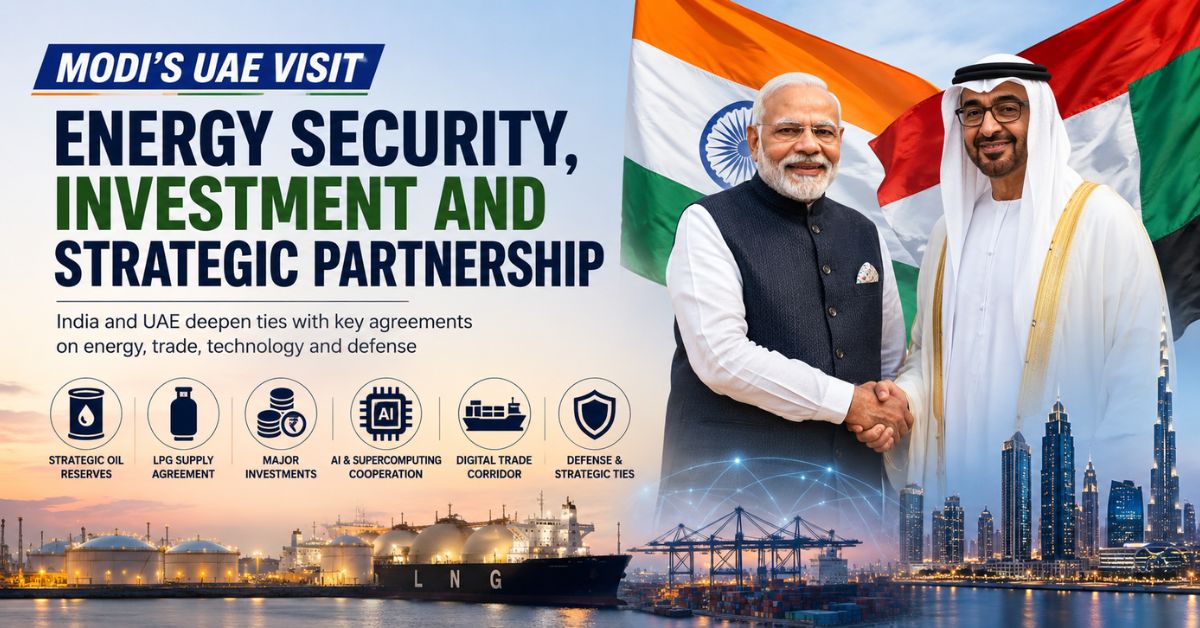
- India and the UAE signed agreements focused on strategic oil reserves, LPG supplies, and digital trade systems.
- ADNOC expanded cooperation with India on petroleum storage and long-term energy security.
- UAE-linked institutions discussed major investments in banking, infrastructure, and technology sectors in India.
- India’s C-DAC and UAE-based G42 partnered on a large-scale AI supercomputing initiative.
- Both countries emphasized regional stability and safe shipping routes through the Strait of Hormuz.
Prime Minister Narendra Modi’s visit to the United Arab Emirates on May 15 placed energy security, investment, and regional stability at the center of India’s growing partnership with the Gulf nation. The visit, which marked the first leg of his five-country tour, came at a time of rising tensions in West Asia and increasing concerns over disruptions to global energy supplies and shipping routes, further emphasizing the importance of India UAE energy cooperation.
India and the UAE signed a series of agreements covering strategic oil reserves, liquefied petroleum gas supplies, digital trade systems, advanced technology, and defense cooperation. Officials from both countries presented the discussions as part of a wider effort to deepen the “Comprehensive Strategic Partnership” that has steadily expanded over the past decade.
Energy Security Takes Center Stage
One of the most important outcomes of the visit was an agreement involving Indian Strategic Petroleum Reserves Ltd (ISPRL) and the Abu Dhabi National Oil Company (ADNOC). Under the arrangement, the UAE will increase its participation in India’s strategic petroleum reserve network, which India uses as a safeguard during global supply disruptions and price shocks.
The agreement is expected to strengthen India’s emergency oil storage capacity at a time when instability in West Asia continues to affect global energy markets. India imports more than 80 percent of its crude oil requirements, making supply security a major policy concern for New Delhi.
Indian Oil Corporation and ADNOC also signed a long-term agreement for liquefied petroleum gas, or LPG, supplies. LPG is widely used in Indian households for cooking fuel, and stable household LPG availability is considered important for controlling domestic price pressure during periods of volatility in global markets.
The two countries additionally discussed the possibility of developing strategic gas storage systems in India. While officials did not announce a final project, the talks reflected India’s broader effort to build long-term energy reserves beyond crude oil.
Major Investment Commitments
Investment commitments formed another major part of the visit. UAE-based banking group Emirates NBD moved forward with plans linked to its proposed multi-billion-dollar stake acquisition in RBL Bank, one of India’s private sector lenders. The deal is expected to increase the UAE’s financial presence in India’s banking sector.
The Abu Dhabi Investment Authority, one of the world’s largest sovereign wealth funds, also reaffirmed support for infrastructure investment in India through the National Infrastructure and Investment Fund. Officials said the focus would remain on long-term projects including transport, logistics, renewable energy, and urban infrastructure.
The UAE’s International Holding Company, which has expanded rapidly across several sectors in recent years, also expressed interest in increasing investments in India. Though detailed announcements were limited, discussions reportedly covered areas such as manufacturing, logistics, and technology.
Technology and Trade Expansion
The visit also highlighted the growing role of artificial intelligence and digital infrastructure in India-UAE ties. India’s Centre for Development of Advanced Computing, known as C-DAC, entered into cooperation with UAE-based technology firm G42 on a major supercomputing project.
The proposed system, expected to support advanced AI research and data processing, is part of a wider push by both countries to strengthen sovereign technology capabilities. Officials described the project as an important step toward deeper collaboration in high-performance computing and digital infrastructure.
Trade and logistics were another focus area during the meetings. The two sides operationalized the MAITRI digital trade initiative, designed to connect customs systems, ports, and trade processes between the two countries. The system is expected to reduce paperwork, improve cargo movement, and lower shipping delays for businesses involved in bilateral trade.
India and the UAE have steadily expanded economic ties since signing the Comprehensive Economic Partnership Agreement in 2022. Bilateral trade between the two countries has grown sharply in recent years, with the UAE remaining one of India’s largest trading partners and a major source of foreign investment.
Defense Cooperation and Regional Concerns
Defense cooperation also received attention during the visit. Officials from both countries agreed to deepen collaboration in defense manufacturing and technology development, moving beyond the traditional buyer-seller relationship that has shaped much of India’s earlier Gulf defense engagement.
The geopolitical backdrop of the visit remained difficult to ignore. Continuing tensions in West Asia and concerns about attacks affecting maritime routes have raised fears over the security of energy shipments through the Strait of Hormuz, one of the world’s most important oil transit corridors.
During the meetings, Modi emphasized the need for regional stability and safe maritime passage. India has repeatedly stated that disruptions in the Gulf directly affect its economic and energy interests because of its heavy dependence on imported oil and the large Indian population working in the region.
A Strategic Shift in India-UAE Relations
While earlier India-UAE engagements often focused heavily on diaspora ties and cultural cooperation, this visit was notably centered on strategic and economic priorities. Energy storage, digital trade systems, investment flows, defense cooperation, and artificial intelligence emerged as the main pillars of discussion.
The visit also reflected the broader shift in India’s foreign policy approach toward the Gulf region. The UAE is increasingly seen not only as an energy supplier but also as a long-term strategic partner in infrastructure, finance, logistics, and emerging technologies.
For India, the agreements announced during the visit are aimed at reducing economic vulnerability during periods of global uncertainty. For the UAE, the partnership offers deeper access to one of the world’s fastest-growing major economies as both countries continue to expand cooperation beyond traditional oil trade.