Entertainment Industry Crisis Overview
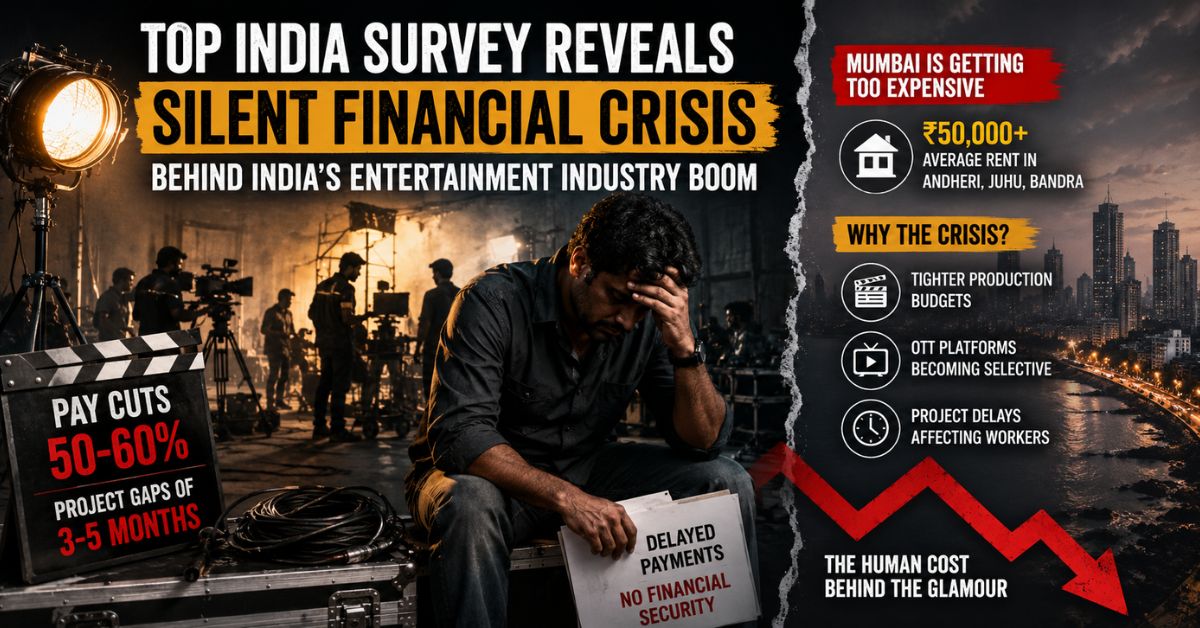
- The Top India Survey claims many entertainment workers are facing 50% to 60% income reductions.
- Freelancers and technicians are reportedly dealing with long gaps between projects and delayed payments.
- Rising living costs in Mumbai are forcing some workers to leave the city or return to their hometowns.
- OTT platforms and production houses are becoming more selective with budgets and project approvals.
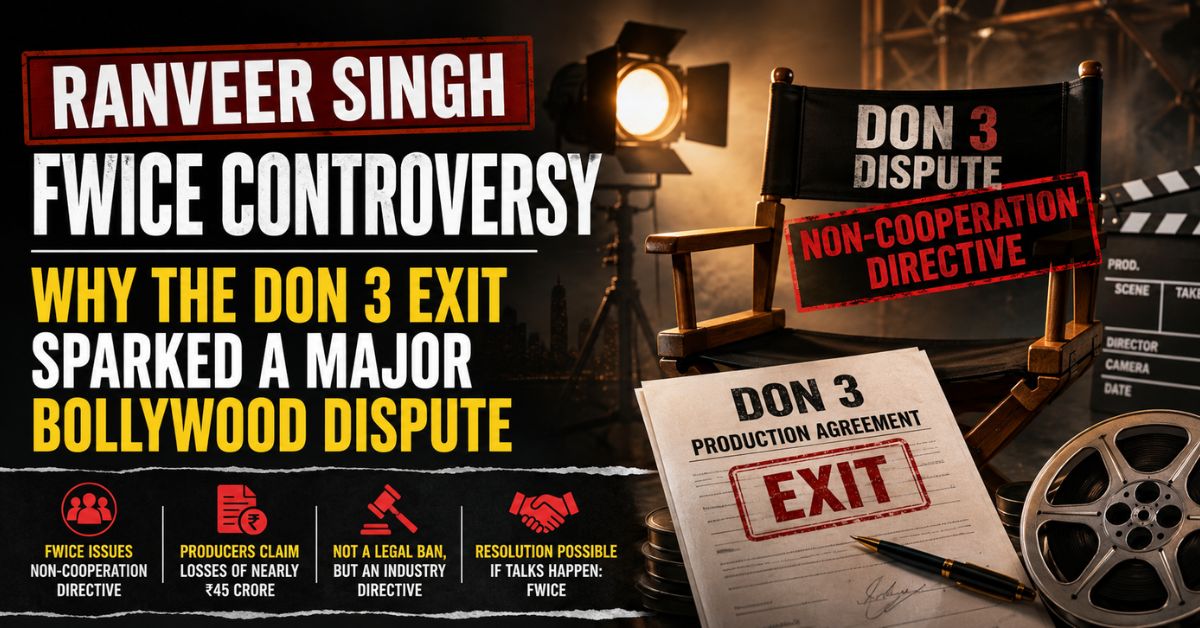
- The debate has reignited calls for industry reforms, wage protections, and financial support systems, including the role of the FWICE union.
India’s entertainment industry is once again facing questions about its economic structure after a new report known as “The Top India Survey” triggered debate across Bollywood and the wider media business. The survey, released in May 2026 and widely discussed by platforms including The Economic Times, claims that thousands of workers behind Indian films, television shows, OTT productions, and celebrity management are dealing with falling incomes, delayed payments, and long periods without work despite the visible success of major stars.
The findings have quickly become one of the most talked-about entertainment industry news stories in India because they expose a sharp contrast between headline box office numbers and the actual condition of the people who keep productions running every day, similar to the exit poll predictions.
According to the survey, which was reportedly based on feedback from more than 1,000 industry professionals, many workers said their earnings have fallen by nearly 50% to 60% compared to earlier years. The affected group includes assistant directors, makeup artists, costume assistants, junior artists, camera operators, light technicians, production assistants, and freelance support staff.
The report also claims that project opportunities have slowed significantly, contributing to the ongoing LPG supply disruption affecting various sectors. Workers who once moved directly from one production to another are now facing gaps of three to five months between assignments. This trend is especially serious because a large section of India’s entertainment workforce is freelance-based and survives on short-term contracts rather than permanent salaries.
Verification of the Survey Claims
A review of current industry reporting suggests that many of the broader claims mentioned in the survey are consistent with recent developments across India’s entertainment and OTT sectors.
Reports published in May 2026 indicate that streaming platforms are becoming more selective about approving new projects and that production houses are increasingly moving toward safer commercial bets instead of experimental mid-budget content.
Industry reports also show that while India’s media and entertainment market continues to grow overall, the growth is concentrated in certain segments such as digital advertising, large theatrical releases, gaming, and live events rather than evenly distributed across the workforce.
The Economic Survey 2025-26 and multiple industry analyses describe India’s entertainment sector as a growing services economy with strong long-term potential. However, those reports focus mostly on market size, advertising growth, exports, and digital expansion rather than wage stability for freelancers.
This means the larger business outlook for Indian entertainment remains positive, but that growth is not necessarily reaching the lower and middle layers of the workforce, especially in light of recent economic changes like the ₹10 duty reduction India that may impact spending power.
The Growing Divide Inside Bollywood
One of the most striking parts of the survey is the widening divide between top celebrities and ordinary industry workers.
The report suggests that major stars such as Shah Rukh Khan, Salman Khan, and Ranveer Singh continue to command massive fees and remain commercially secure even during the slowdown. Large-scale projects built around established stars are still attracting financing because producers view them as safer investments in an uncertain market.
At the same time, many smaller professionals are seeing fewer opportunities as producers attempt to reduce costs wherever possible.
The impact appears to be especially severe for workers considered “non-essential” during budget optimization. Celebrity fitness trainers, spot boys, assistant stylists, and supporting production staff are reportedly among the worst affected because modern productions are trying to operate with leaner teams.
Several entertainment professionals quoted across industry discussions have described the current period as worse than expected because the slowdown is happening after the post-pandemic recovery phase, when many workers believed stable work had finally returned.
Why the OTT Slowdown Matters
The streaming boom that transformed Indian entertainment after 2020 is now entering a very different phase.
For several years, platforms such as Netflix and Amazon Prime Video aggressively invested in original Indian content. This created jobs for writers, editors, cinematographers, assistant directors, and independent actors. Many mid-budget projects that may never have reached theatres found new life on OTT platforms.
That environment is changing.
Recent reports indicate that streaming companies are now prioritizing profitability, audience retention, and controlled spending.
This shift has created a major structural problem for workers who depended on the high-volume OTT production cycle. Fewer approvals mean fewer shoots, shorter production schedules, and lower demand for freelance crews.
Industry insiders also say that OTT platforms are increasingly choosing projects led by established actors or franchises rather than risky experimental concepts. As a result, smaller filmmakers and new talent are struggling to secure financing.
This may directly affect the type of content audiences see in 2026.
Instead of a wide mix of crime dramas, social stories, regional experiments, and independent films, platforms may move toward safer commercial genres with proven audience demand. Action thrillers, large-scale dramas, celebrity-led series, and franchise content could dominate while niche storytelling becomes harder to fund.
The Mumbai Cost of Survival
The survey has also brought attention to the financial pressure of living in Mumbai, which remains India’s entertainment capital.
Areas such as Andheri, Juhu, and Bandra continue to serve as key production hubs. However, rent and daily living costs in these areas have increased sharply over the past few years.
According to the survey discussion, many workers are paying rents close to ₹50,000 per month while their incomes have been reduced by half.
For freelance workers without guaranteed monthly salaries, that equation is becoming impossible to sustain.
As a result, a growing number of technicians and junior workers are reportedly returning to their hometowns or considering career changes outside the entertainment industry altogether.
This could eventually create a talent shortage in certain technical departments if experienced workers permanently leave the business.
Delayed Payments and the Freelance Crisis
Another major issue highlighted by the survey is delayed payment cycles.
Freelancers across India’s entertainment industry often work without strong legal protections or structured contracts. Payments may arrive months after a project finishes, leaving workers dependent on savings or personal loans during the waiting period.
The current slowdown has reportedly made this problem worse.
Workers claim they are now waiting longer for payments while simultaneously getting fewer projects. Some are borrowing from relatives or taking high-interest loans simply to survive in Mumbai.
This has reopened discussions around whether India’s entertainment industry needs formal wage protections, insurance systems, or emergency welfare funds for freelance workers.
Industry bodies such as the Federation of Western India Cine Employees have previously raised concerns about financial stress within the sector, especially during periods of weak theatrical business or changing production patterns.
Why the Crisis Exists Despite Industry Growth
At first glance, the situation appears contradictory because India’s entertainment economy is still growing overall.
Industry estimates suggest India’s media and entertainment sector could grow to more than ₹3.3 lakh crore by 2028, driven largely by digital media, online advertising, gaming, and premium content consumption.
Advertising forecasts also remain positive for 2026.
However, revenue growth at the top of the industry does not automatically create stable income for freelance workers.
Much of the new investment is concentrated in technology platforms, digital advertising systems, sports rights, and large commercial productions. Smaller production ecosystems that once supported thousands of daily-wage workers are becoming less active.
The industry is also shifting toward efficiency. Producers now prefer shorter shoots, smaller crews, controlled schedules, and lower-risk investments. While this improves business margins, it reduces employment opportunities across the broader workforce.
Can Structural Reforms Prevent a Bigger Crisis?
The discussion around “The Top India Survey” has now evolved into a larger debate about reform.
Many workers are calling for standardized payment timelines, minimum wage structures, medical support systems, and stronger union protections for freelancers.
Some industry observers believe India may eventually require a centralized welfare system for entertainment workers similar to protections available in parts of the Western film industry.
Others argue that stronger unions alone may not solve the issue because the industry itself is going through a business transition shaped by streaming economics, changing audience behavior, and rising production costs.
What seems increasingly clear is that India’s entertainment industry is entering a more cautious financial phase after years of aggressive expansion.
The glamour associated with Bollywood and OTT success still dominates public perception. Yet behind that image, thousands of workers who build sets, manage shoots, style actors, operate lights, edit footage, and support productions are dealing with uncertainty that rarely appears in box office headlines.
The latest survey has become important not because it revealed a temporary slowdown, but because it exposed how unevenly the industry’s success is being distributed.