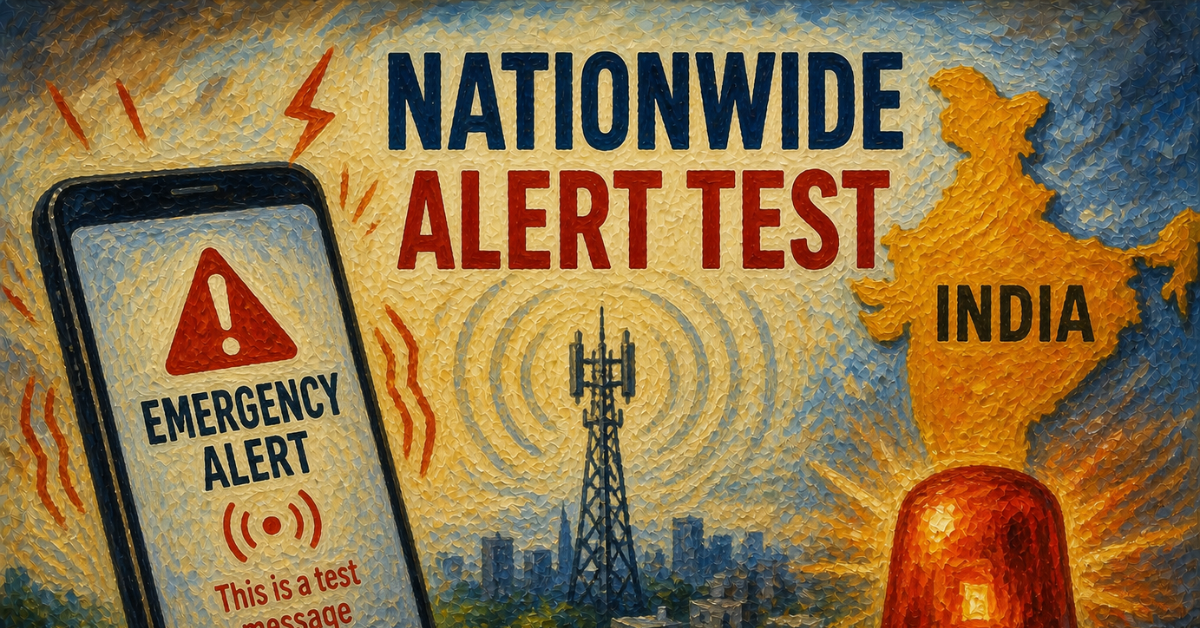
Nationwide test alert triggers phones as India rolls out new disaster warning system
- Government conducts nationwide test of Cell Broadcast Alert System on May 2
- Alert sent by NDMA and DoT with loud sound overriding silent mode
- System designed for instant emergency warnings without internet
- No action required from public; officials confirm routine test
- Part of India’s SACHET disaster alert framework rollout
Mobile phones across India emitted loud alarms and displayed emergency notifications on May 2, 2026, as part of a nationwide test of the government’s Cell Broadcast Alert System. Officials said the exercise is aimed at strengthening the country’s disaster warning infrastructure.
The test message, issued by the National Disaster Management Authority in coordination with the Department of Telecommunications, informed users that the alert was part of a trial and that no action was required. The notification was accompanied by a high-volume alert tone and vibration that activated even on devices set to silent or “Do Not Disturb” mode.
The new system marks a shift from conventional SMS-based alerts to cell broadcast technology, which allows messages to be transmitted simultaneously to all mobile devices connected to network towers within a defined geographic area. Officials said this approach eliminates delays caused by network congestion during emergencies.
Unlike SMS alerts, the broadcast system does not rely on internet connectivity or user-specific delivery. Messages are pushed directly through telecom infrastructure, ensuring that even users without mobile data or with weak signal conditions can receive warnings.
The government intends to deploy the system for real-time alerts related to natural disasters and emergencies, including earthquakes, tsunamis, flash floods, lightning strikes, and industrial hazards such as gas leaks, similar to the Agni-1 capabilities. Authorities said the system is designed to provide immediate, location-specific warnings to minimize response time.
Officials emphasized that the May 2 alert was a routine test conducted to assess system performance across different regions, mobile networks, and device types. The exercise covered major cities and state capitals, though certain areas may have been excluded depending on operational considerations.
The alert system is part of India’s broader disaster preparedness framework known as SACHET, which integrates early warning mechanisms with communication infrastructure to improve public safety outcomes, including initiatives like Mission Divyastra 2024.
Users who did not receive the alert or wish to review their settings can access emergency alert options on their devices. On most smartphones, these controls are available under settings related to safety, emergency alerts, or notifications, where test alerts can be enabled or disabled.
Authorities have advised the public not to be alarmed by the notification and to treat it as part of ongoing efforts to build a more resilient emergency response system.