


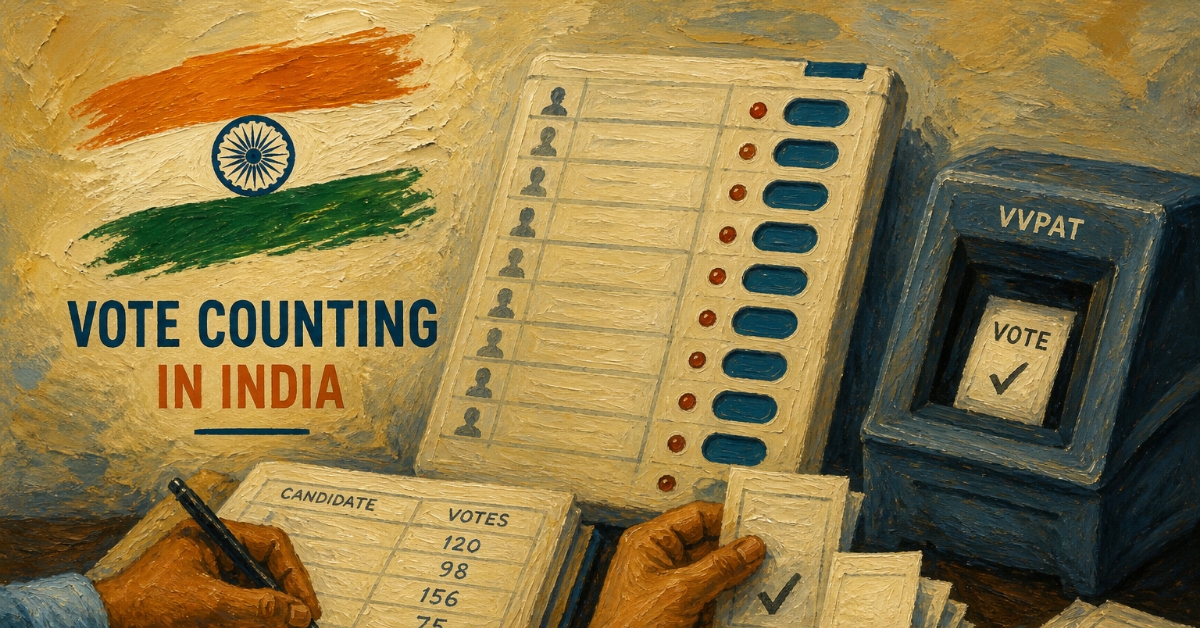
How vote counting works in India explained step by step
- Vote counting in India is conducted under strict supervision of the Election Commission
- Postal ballots are counted first, followed by EVM results in structured rounds
- Each round represents counting of votes from a fixed set of polling stations
- VVPAT slips are used to verify electronic voting machine results
- Final results are declared after verification by the Returning Officer
The process of counting votes in India is a structured and transparent system managed by the Election Commission of India. It is designed to ensure accuracy, prevent tampering, and maintain public trust in election results. From secure storage of voting machines to round wise counting and final declaration, each stage follows a defined procedure.
Preparation Before Counting Day
After polling ends, all Electronic Voting Machines are sealed and transported to designated strong rooms. These facilities are guarded round the clock with security personnel and monitored through CCTV. Candidates and their representatives are allowed to observe the sealing process and can monitor the strong room perimeter until counting day.
On counting day, usually starting at 8:00 AM, the strong rooms are opened in the presence of the Returning Officer and counting agents of candidates. This ensures that the machines remain secure and untampered until counting begins.
Which Votes Are Counted First
The counting process begins with postal ballots. These include votes cast by service voters such as armed forces personnel, election duty staff, and approved absentee voters. Postal ballots are counted manually at designated tables before electronic counting begins.
This stage is important because in closely contested seats, postal ballots can influence early trends. In some cases, if the margin of victory is smaller than rejected postal ballots, additional verification may be required.
How EVM Vote Counting Works
After postal ballots, counting of votes recorded in Electronic Voting Machines begins. Each counting hall is divided into multiple tables, typically around fourteen. Each table is staffed by officials and monitored by party agents.
Before counting begins for any machine, seals are checked to confirm that the EVM has not been tampered with. Once verified, the control unit is opened and the result button is pressed. The machine displays the total votes polled and the votes secured by each candidate.
These results are recorded on official forms and signed by counting agents. The data is then compiled and transmitted to the Election Commission system for public updates.
What Is a Round in Vote Counting
A common question is what a “round” means in vote counting. A round refers to the counting of votes from a set number of polling stations, usually equal to the number of tables in the counting hall.
For example, if there are fourteen tables, each table counts one EVM per cycle. Once all tables complete their assigned machines, that set is declared as one round. The results of each round are announced sequentially.
The number of rounds depends on the total number of polling stations in a constituency. Larger constituencies may have twenty or more rounds, while smaller ones may have fewer.
VVPAT Verification Process
To ensure transparency, the Voter Verifiable Paper Audit Trail system acts as a physical backup to electronic voting. In each assembly constituency, VVPAT slips from five randomly selected polling stations are counted manually.
These slips are matched with the corresponding EVM results. This cross verification ensures that the electronic count reflects the actual votes cast. Any discrepancy, though rare, leads to further scrutiny.
How Long Vote Counting Takes in India
The duration of vote counting varies depending on the size of the constituency and the number of rounds. In most cases, counting is completed within a single day, often by afternoon or evening.
However, in constituencies with a large number of polling stations or close contests, counting may take longer due to additional verification steps.
How Winners Are Decided
India follows the first past the post system. This means there is no fixed number of votes required to win a seat. The candidate who receives the highest number of valid votes in a constituency is declared the winner.
After all rounds are completed, the Returning Officer compiles the final tally, verifies the data, and formally declares the result. The winning candidate is then issued an official election certificate.
Transparency and Monitoring
The entire process is conducted in the presence of counting agents representing candidates. Every stage, from opening strong rooms to recording results, is monitored and documented. This ensures that all stakeholders can verify the process and raise objections if needed.
Real time updates are also shared through official channels, allowing the public to track counting progress and trends.
Why the Process Is Considered Reliable
The combination of electronic systems, manual verification, multi layer security, and public oversight makes vote counting in India a robust process. While delays or disputes may arise in close contests, the structured approach ensures that results are based on verified data.
Understanding how votes are counted helps explain why results may take time and why early trends can change. It also clarifies common doubts about rounds, timelines, and how winners are determined.