


Key Highlights
- India and the UAE operationalized the MAITRI Virtual Trade Corridor during PM Modi’s May 2026 Abu Dhabi visit.
- The platform digitally connects customs systems, ports, and logistics infrastructure between both countries.
- MAITRI aims to reduce cargo delays, paperwork, and trade-related administrative costs.
- The initiative is expected to support MSME exporters through simplified cross-border trade procedures.
- The project is also being viewed as an important digital foundation for the India-Middle East-Europe Economic Corridor (IMEC).
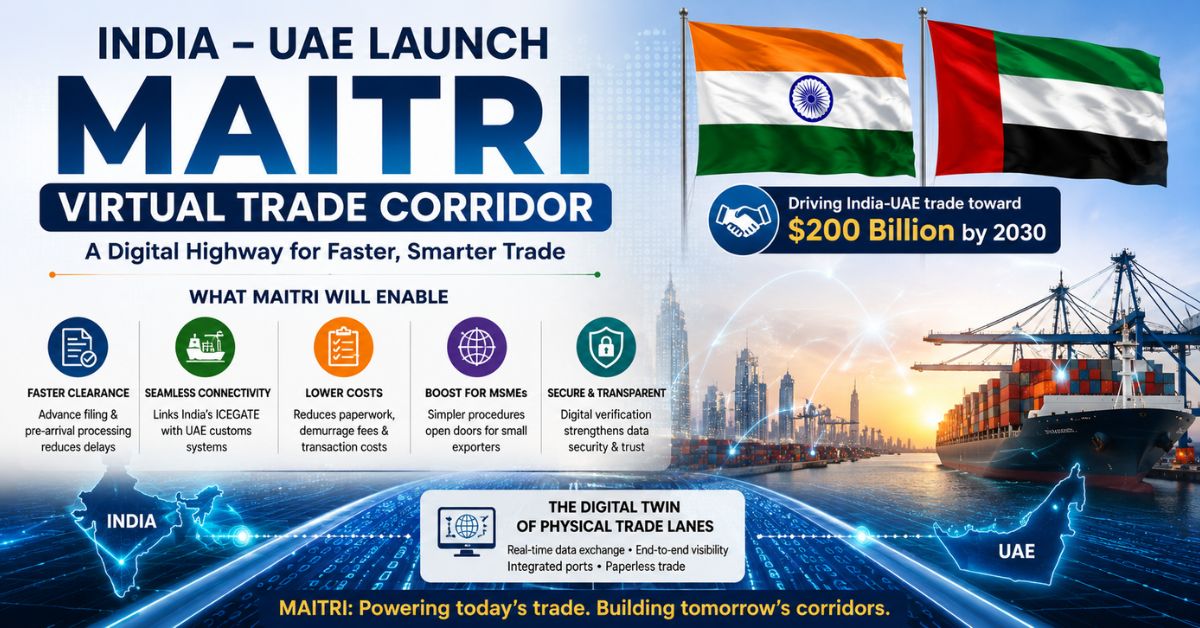
India and the United Arab Emirates have launched a new digital trade system called the MAITRI Virtual Trade Corridor, a platform designed to reduce shipping delays, simplify customs procedures, and strengthen trade connectivity between the two countries.
The initiative, officially operationalized during Prime Minister Narendra Modi’s visit to Abu Dhabi on May 15, is expected to become a key part of the growing India-UAE economic partnership. Officials from both sides described the corridor as a major step toward building faster and more reliable trade routes at a time when global supply chains are facing increasing pressure from geopolitical tensions and logistical disruptions.
MAITRI, short for Master Application for International Trade and Regulatory Interface, functions as a digital infrastructure network connecting customs authorities, ports, logistics operators, and regulatory agencies in both countries. The system aims to reduce paperwork and improve cargo movement by allowing trade documents and approvals to move digitally across borders in real time.
Customs and Port Systems Linked Digitally
One of the main features of the platform is customs integration. The corridor links India’s ICEGATE customs system with corresponding UAE customs networks, allowing importers and exporters to submit documentation before cargo reaches port terminals. Officials believe this could significantly reduce waiting periods for shipments arriving at major ports.
Trade experts say pre-arrival processing has become increasingly important for global shipping hubs because delays at ports often create hidden costs for businesses through storage charges, demurrage fees, and disrupted delivery schedules.
The platform also improves coordination between major logistics hubs in both countries. On the Indian side, the system is expected to support operations connected to Jawaharlal Nehru Port Authority and emerging maritime infrastructure projects. In the UAE, the corridor integrates with DP World-linked port and logistics facilities that already handle a large share of regional cargo traffic.
Government officials have said the long-term goal is to create a smoother trade route that functions with the efficiency of a domestic logistics network rather than a traditional international shipping corridor.
Push Toward Digital Trade Infrastructure
The project reflects a wider push by both countries to digitize trade systems and reduce dependence on physical paperwork. While authorities have discussed secure digital verification technologies for trade documents, detailed technical specifications have not yet been publicly released.
Industry analysts say systems like MAITRI could eventually support faster verification of shipping records, certificates of origin, customs filings, and regulatory permits, helping reduce fraud risks and administrative bottlenecks in cross-border trade.
India and the UAE have rapidly expanded economic ties since signing the Comprehensive Economic Partnership Agreement in 2022. Bilateral trade has grown steadily over the past few years, and both governments have set ambitious targets for increasing trade volumes across sectors such as energy, manufacturing, food processing, technology, logistics, and services.
Support for MSMEs and Export Growth
Officials involved in the project believe digital integration will play a central role in meeting those goals. Smaller businesses, especially micro, small, and medium enterprises, are expected to benefit if trade procedures become less expensive and easier to manage.
Many smaller exporters currently depend on complex brokerage systems and third-party compliance networks to navigate international trade rules. Digital trade corridors could reduce some of those barriers by automating portions of customs and logistics procedures.
MAITRI and the IMEC Vision
The MAITRI initiative is also being viewed in the context of the proposed India-Middle East-Europe Economic Corridor, widely known as IMEC. The corridor, announced during the G20 Summit in 2023, aims to connect India with Europe through shipping, rail, energy, and digital infrastructure networks across the Middle East.
Policy experts say the India-UAE route represents one of the most advanced sections of the broader IMEC framework because both countries already possess strong port infrastructure, established trade links, and expanding digital systems.
The launch of MAITRI comes at a time when global shipping routes remain vulnerable to geopolitical instability in West Asia. Concerns over disruptions near the Strait of Hormuz and attacks affecting commercial shipping have increased pressure on governments to strengthen supply chain resilience.
By digitizing customs processing and cargo coordination, India and the UAE hope to make trade flows more predictable even during periods of regional uncertainty.
A Broader Shift in Global Trade Systems
The corridor also reflects a larger shift in global trade policy, where countries are increasingly investing not only in ports and highways but also in digital infrastructure that controls how goods, approvals, and trade data move across borders.
For India, the project supports a broader effort to modernize export systems and position itself as a major manufacturing and logistics hub. For the UAE, deeper digital integration with India strengthens its role as a global trade and transit center connecting Asia, the Middle East, and Europe.
Officials from both countries are expected to continue expanding the platform in the coming years, with additional features likely to focus on logistics automation, regulatory coordination, and faster cargo movement across maritime trade corridors.