


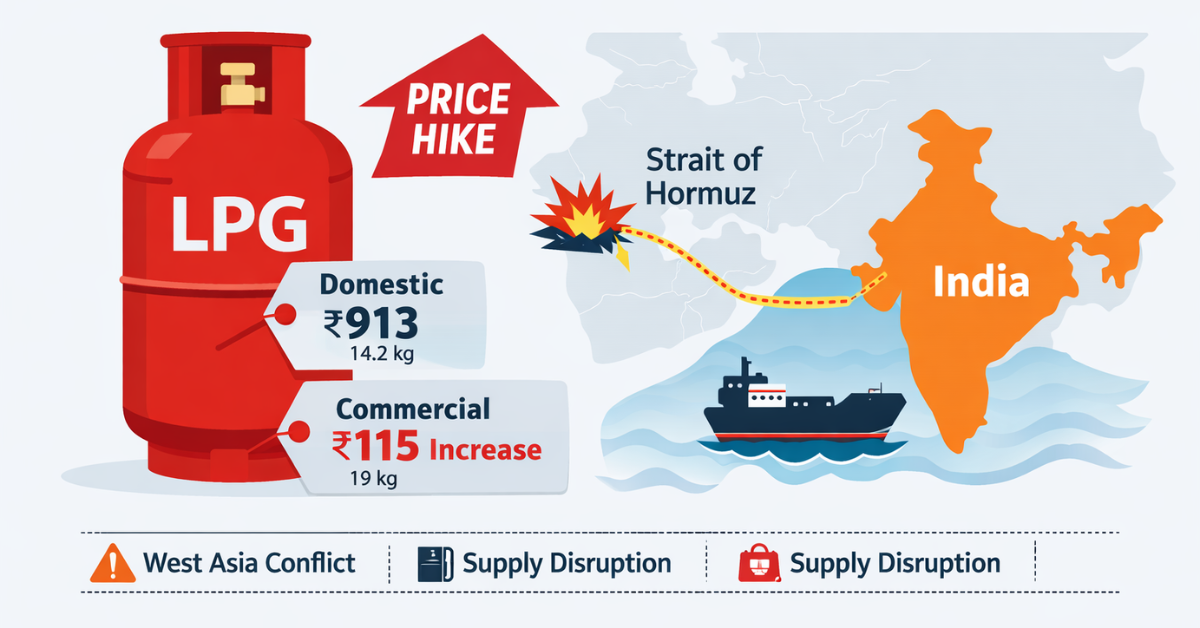
LPG Price Hike and Supply Situation
- India increased the price of domestic LPG cylinders by ₹60 from March 7, 2026, while commercial 19 kg cylinders saw a sharper rise of about ₹115.
- Supply pressure has emerged after disruptions in West Asia shipping routes, particularly near the Strait of Hormuz, which handles a major share of India’s LPG imports.
- Commercial LPG availability has been irregular in cities including Mumbai, Chennai, Bengaluru, and Kolkata, affecting restaurants and hospitality businesses.
- The Centre issued an LPG Control Order on March 8 directing refineries to maximise LPG output and prioritise household supply.
- Authorities invoked the Essential Commodities Act to monitor distribution, enforce stock limits, and prevent hoarding or black marketing.
- Refineries have increased LPG production by roughly 10 percent while operating near full capacity to maintain domestic supply.
- For Pradhan Mantri Ujjwala Yojana beneficiaries, the government continues a ₹300 subsidy per cylinder, with about ₹12,000 crore allocated for the program in 2025-26.
- Commercial users such as hotels and caterers face the greatest impact due to higher cylinder prices and patchy supply in major urban markets.
India is witnessing a noticeable rise in LPG cylinder prices alongside temporary supply disruptions in commercial cylinders, as geopolitical tensions in West Asia affect global energy markets. The central government has responded by tightening supply controls, invoking regulatory powers, and increasing targeted subsidies to shield low-income households from the impact.
Price Hikes Announced from March 7
Domestic cooking gas prices were raised by ₹60 for the standard 14.2 kg LPG cylinder beginning March 7, 2026. This marks the first increase in about a year. In Delhi, the non-subsidised price now stands at roughly ₹913 per cylinder, up from ₹853, with similar price adjustments reported in Mumbai, Kolkata, and Chennai.
The rise has been sharper for commercial LPG cylinders used by restaurants and businesses. The price of a 19 kg commercial cylinder increased by around ₹115 on March 7, adding to earlier price increases recorded during February and early March.
Supply Pressures Linked to West Asia Conflict
The tightening supply situation is closely tied to geopolitical tensions in West Asia, particularly disruptions affecting shipping routes near the Strait of Hormuz. This maritime passage handles a large share of global energy shipments, including LPG supplies bound for India.
India imports roughly 60 to 65 percent of its LPG requirement, with a substantial share sourced from West Asian producers. When tanker movements slow or insurance and security risks rise in the region, delivery schedules to Indian ports can be delayed.
Several cities including Mumbai, Chennai, Bengaluru, and Kolkata have reported irregular availability of 19 kg commercial cylinders. Hotels, restaurants, and catering businesses have been among the most affected due to their heavy reliance on large commercial LPG cylinders.
Authorities have also observed panic bookings in some areas. To prevent hoarding and ensure wider distribution, refill booking intervals have been extended in certain regions from 21 days to 25 days.
Government Invokes Control Measures
The central government issued a new LPG Control Order on March 8, 2026, directing refineries and petrochemical complexes to maximise LPG production. Under the order, propane and butane streams, commonly known as C3 and C4 streams, must be diverted fully toward LPG output rather than other industrial uses.
Domestic consumption has been given priority under these directives. Oil marketing companies are required to ensure that available LPG supplies flow primarily toward household cooking gas distribution.
Refineries have reportedly increased LPG output by about 10 percent and are currently operating at near full capacity to meet demand. Government officials have maintained that there is no immediate crisis for household cooking gas availability.
The Essential Commodities Act has also been invoked to monitor the supply chain. The law allows authorities to impose stock limits, prevent hoarding, and take action against black marketing. State governments have been instructed to submit daily reports on LPG availability and distribution.
Subsidy Support for Low-Income Households
To cushion economically vulnerable households from rising prices, the government has continued the targeted LPG subsidy under the Pradhan Mantri Ujjwala Yojana for the 2025-26 financial year.
Eligible beneficiaries receive a subsidy of ₹300 per 14.2 kg cylinder for a limited number of refills annually. The government has allocated about ₹12,000 crore to support this program, which covers more than 10 crore low-income households across the country.
The Union Budget 2026 also set aside additional funding aimed at expanding LPG access and strengthening the domestic cooking gas distribution network.
Impact on Households and Businesses
Urban households outside the Ujjwala scheme will experience the full impact of the ₹60 price increase unless they receive limited direct benefit transfers under other LPG support programs.
For Ujjwala beneficiaries, the higher market price may still appear in the upfront payment, but the subsidy credited later helps soften the overall burden.
Commercial users remain the most exposed to the current situation. Restaurants, hotels, and catering businesses face both higher costs and irregular cylinder availability in some metropolitan markets, which may translate into rising operational expenses for the hospitality sector.