


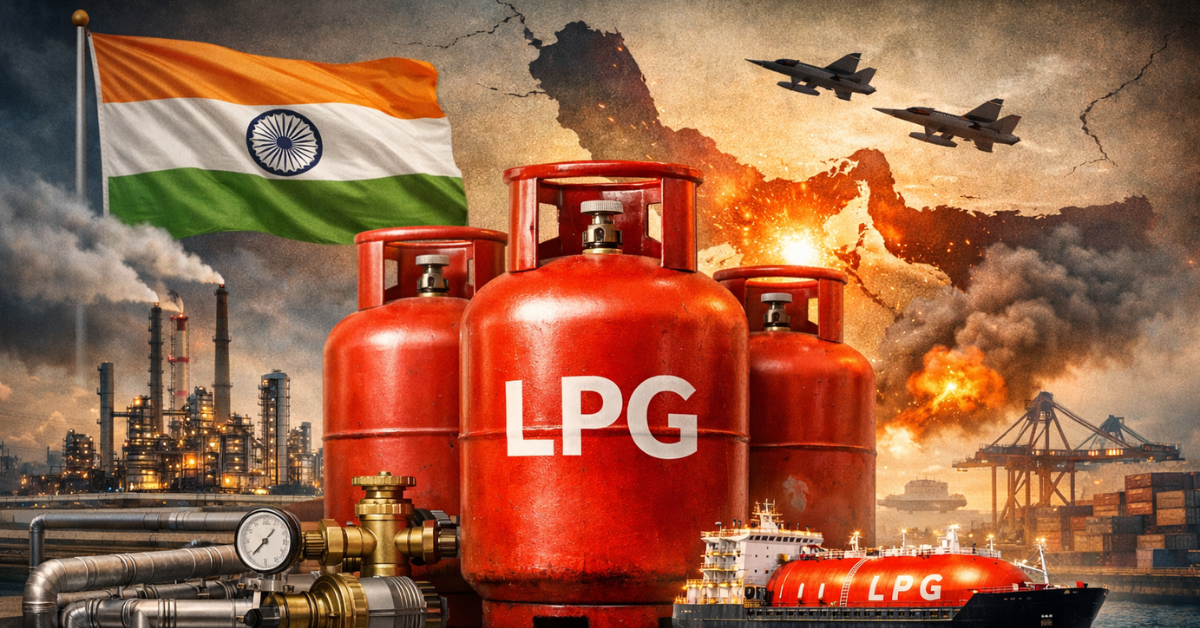
LPG Supply Developments
- India introduced supply management measures to maintain stable LPG availability amid geopolitical tensions affecting energy markets and shipping routes in West Asia.
- The Ministry of Petroleum and Natural Gas directed domestic refineries to maximise LPG production and prioritise cooking gas supply for households.
- Oil marketing companies extended the LPG cylinder refill booking interval from 21 days to 25 days to discourage panic buying and prevent hoarding.
- Commercial LPG supply has been temporarily limited to about 20 percent of normal allocation to prioritise domestic consumers.
- India has expanded LPG imports from alternative suppliers including the United States, Norway, Canada, and Russia to strengthen supply resilience.
- The government stated that current measures are precautionary and that LPG supply for households remains stable across the country.
| Key Area | Government Action |
|---|---|
| Domestic Production | Refineries directed to maximise LPG output and prioritise household supply. |
| Anti-Hoarding Measures | LPG cylinder booking interval extended to 25 days to discourage stockpiling. |
| Commercial LPG Regulation | Commercial LPG allocations limited to around 20 percent to prioritise households. |
| Import Diversification | Additional LPG cargoes sourced from the US, Norway, Canada, and Russia. |
| Supply Priority | Household LPG distribution remains the government’s primary focus. |
India’s government has introduced a series of supply management measures to maintain stable availability of liquefied petroleum gas (LPG) as geopolitical tensions in West Asia continue to affect global energy markets and shipping routes.
The Ministry of Petroleum and Natural Gas said the steps are intended to ensure uninterrupted cooking gas supply for households while global markets face uncertainty linked to the conflict around the Strait of Hormuz, a key maritime corridor for global energy trade.
Union Petroleum and Natural Gas Minister Hardeep Singh Puri informed Parliament on 12 March 2026 that India’s fuel supply situation remains stable and that the government has activated multiple safeguards to maintain domestic energy security.
Government Directs Refineries to Increase LPG Output
As part of the stabilization response, the government issued emergency directives to domestic refineries to maximize LPG production. Refineries have been instructed to increase recovery of LPG from propane and butane streams and prioritize cooking gas output over other petrochemical uses where feasible.
The additional LPG output is being supplied to the public sector oil marketing companies Indian Oil Corporation, Bharat Petroleum Corporation, and Hindustan Petroleum Corporation, which are responsible for distributing cylinders to households across the country.
Officials stated that the refinery adjustments have helped increase domestic LPG production over recent days, strengthening supplies available for household distribution.
Measures Introduced to Prevent Hoarding
To maintain equitable distribution during the period of heightened demand, oil marketing companies have introduced temporary demand management measures.
The minimum interval between LPG cylinder refill bookings has been extended from 21 days to 25 days. Authorities say the change is designed to discourage panic buying and ensure that cylinders remain available across distribution networks.
The central government has also advised state administrations to closely monitor LPG supply chains and take action against hoarding or black market activity if detected.
In addition, oil marketing companies have limited allocations of commercial LPG to roughly 20 percent of normal supply volumes in order to prioritize household consumption.
India Expands LPG Import Sources
Alongside domestic production measures, India has also increased efforts to diversify LPG imports beyond traditional suppliers in the Gulf region.
Government officials stated that additional cargoes are being sourced from countries including the United States, Norway, Canada, and Russia as part of a broader strategy to reduce reliance on shipments that transit through the Strait of Hormuz.
The diversification of import sources is intended to strengthen supply resilience while global shipping routes in the region remain sensitive to geopolitical developments.
Household Supply Remains the Priority
India currently has more than 330 million LPG connections under its national cooking gas distribution network, making it one of the world’s largest consumer bases for household LPG.
Officials emphasized that the current measures are precautionary and aimed at stabilizing supply flows rather than responding to a nationwide shortage.
The government continues to monitor global energy markets and shipping developments in West Asia while coordinating with oil marketing companies and refineries to ensure that LPG deliveries to households remain consistent.