


Key Takeaways From India’s 2026 Monsoon Outlook
- The India Meteorological Department (IMD) has lowered its 2026 southwest monsoon forecast to 90% of the Long Period Average, placing it in the “below normal” category.
- Strengthening El Niño conditions in the Pacific Ocean are expected to weaken rainfall across large parts of India during the June-September monsoon season.
- Northwest India, Central India, and the South Peninsula are likely to receive below-normal rainfall, while Northeast India is expected to see near-normal rainfall.
- Lower rainfall could affect kharif crops such as rice, pulses, oilseeds, and cotton, raising concerns about farm incomes and agricultural production.
- Experts warn that weaker monsoon rains may increase food inflation, strain water resources, and contribute to more intense heatwave conditions in several regions.
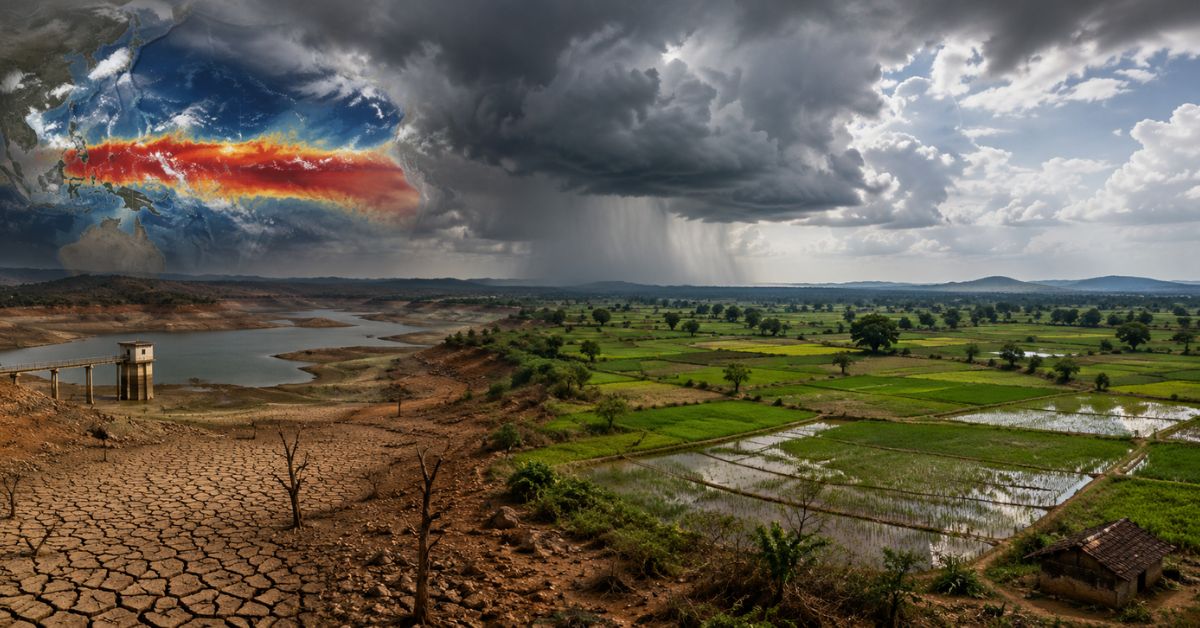
India is preparing for what could become one of its weakest monsoon seasons in more than a decade as El Niño conditions strengthen across the Pacific Ocean. The India Meteorological Department (IMD) has revised its forecast for the 2026 southwest monsoon to 90% of the Long Period Average (LPA), placing rainfall in the “below normal” category.
The forecast has raised concerns among farmers, economists, and climate experts because the monsoon remains the backbone of India’s agriculture and water systems. Nearly half of the country’s farmland still depends directly on seasonal rainfall, while reservoirs, rivers, and groundwater supplies are heavily influenced by the amount of rain received during the June-to-September monsoon period.
Although a below-normal monsoon does not automatically mean drought across the country, the growing influence of El Niño has increased the risk of rainfall shortages in several key agricultural regions. Experts are watching the situation closely because rainfall during July and August is especially important for crop growth and rural livelihoods.
Why El Niño Matters for India’s Monsoon
El Niño is a climate pattern that develops when sea surface temperatures in the central and eastern Pacific Ocean become warmer than normal. While this warming occurs thousands of kilometres away from India, it can change weather patterns across the globe.
For India, El Niño often weakens the southwest monsoon by shifting rainfall-producing atmospheric systems away from South Asia. Scientists describe this process as a disruption of the Walker Circulation, a large-scale movement of air that helps support monsoon rainfall.
When El Niño becomes stronger, rising air and storm activity tend to move toward the Pacific Ocean. As a result, moisture transport toward the Indian subcontinent can weaken, leading to reduced rainfall during the monsoon season.
Historical data shows that many El Niño years have produced below-average rainfall in India. However, the relationship is not always identical because other climate factors can influence the final outcome.
IMD Lowers Monsoon Forecast for 2026
The IMD’s latest update issued on May 29, 2026, lowered the expected monsoon rainfall to 90% of the Long Period Average.
This revision reflects increasing concern about the rapid strengthening of El Niño conditions. Earlier forecasts had suggested a somewhat better monsoon season, but recent ocean and atmospheric observations prompted forecasters to reduce their expectations.
A monsoon delivering 90% of average rainfall may appear close to normal at first glance. However, even a relatively small national shortfall can create serious problems when rainfall becomes unevenly distributed across regions.
Agriculture depends not only on total seasonal rainfall but also on when and where that rain falls. Long dry periods during important crop growth stages can reduce yields even if seasonal rainfall totals appear reasonable.
Why the Indian Ocean Is Not Providing Much Help
In some years, the Indian Ocean can partially offset the effects of El Niño.
A climate pattern known as the Indian Ocean Dipole (IOD) can strengthen rainfall over India when it enters a positive phase. A positive IOD often increases moisture movement toward the subcontinent and supports stronger monsoon conditions.
This year, however, climate indicators suggest that the IOD is likely to remain neutral for much of the monsoon season. As a result, India may not receive the additional support that has helped reduce El Niño impacts in some previous years.
The absence of a strong positive IOD means that El Niño could have a greater influence on rainfall patterns during the critical monsoon months.
Expected Regional Rainfall Impact
| Region | Expected Rainfall Outlook |
|---|---|
| Northwest India | Likely to receive below-normal rainfall with increased water stress concerns. |
| Central India | Below-normal rainfall expected across key agricultural areas. |
| South Peninsula | Forecast to receive below-normal rainfall during the monsoon season. |
| Northeast India | Rainfall expected to remain near normal compared to other regions. |
Northwest India is expected to receive below-normal rainfall. This includes regions where water availability is already under pressure because of high temperatures and growing demand.
Central India is another area of concern. The region contains much of India’s Monsoon Core Zone, where rainfall is especially important for agricultural production. States across central India produce large quantities of rice, pulses, soybean, cotton, and other important crops.
The southern peninsula is also expected to receive below-normal rainfall. Lower rainfall in these regions could affect reservoirs, hydropower generation, and agricultural activity.
Northeast India stands out as the only major region where rainfall is expected to remain close to normal levels. Even so, local variations may still occur depending on weather conditions throughout the season.
What Could Happen to Kharif Crops?
Agriculture is likely to be one of the sectors most affected by a weaker monsoon.
India’s kharif cropping season begins with the arrival of monsoon rains. Farmers across the country plant crops such as rice, maize, pulses, cotton, sugarcane, and oilseeds during this period.
Many farmers depend entirely on rainfall because they do not have access to irrigation systems. Delayed rainfall, long dry spells, or lower-than-normal seasonal rain can reduce crop growth and lower yields.
Rice is particularly sensitive because large areas of cultivation require adequate rainfall during planting and early growth stages. Pulses and oilseeds may also face challenges if soil moisture levels remain below normal.
Farmers could respond by changing crop choices, reducing planted acreage, or relying more heavily on groundwater resources. Such adjustments may help reduce losses but often increase production costs.
Impact on Food Prices and Inflation
The effects of a weak monsoon often extend beyond the farming sector.
Lower agricultural production can reduce the supply of food products reaching markets. When supply falls and demand remains stable, prices tend to rise.
Food inflation is a major concern because it directly affects household budgets. Staples such as rice, vegetables, pulses, and edible oils are especially important for millions of families.
Economists are closely monitoring the 2026 monsoon because higher food prices can influence overall inflation trends. Rising food costs may also affect government policies related to food security, subsidies, and market interventions.
The actual impact on prices will depend on several factors, including rainfall distribution, crop performance, existing food stocks, and government responses.
Water Resources Could Face Additional Pressure
Monsoon rainfall plays a crucial role in replenishing India’s water resources.
Reservoirs across the country rely on seasonal rains to refill after the summer months. Groundwater levels are also strongly influenced by monsoon performance.
A weaker monsoon could reduce water storage levels in some regions, particularly where rainfall deficits persist throughout the season. Lower water availability may affect drinking water supplies, irrigation systems, and industrial operations.
Urban areas are not immune to these risks. Several Indian cities already face growing water demand due to population growth and expanding economic activity. Reduced rainfall can place additional pressure on existing water infrastructure.
Water managers may need to monitor reservoir levels closely and implement conservation measures if rainfall remains below expectations.
Heatwaves May Become More Severe
Rainfall and temperature are closely connected.
Cloud cover and rainfall often help reduce daytime temperatures during the monsoon season. When rainfall becomes limited, temperatures can remain higher for longer periods.
The IMD has already warned about heatwave conditions in several states during the early part of the season. Reduced rainfall could allow heatwaves to become more frequent or intense in some areas.
Higher temperatures can create additional challenges for agriculture, public health, and energy demand. Farmers may face increased crop stress, while households and businesses may use more electricity for cooling.
Heat-related health risks also tend to rise during prolonged periods of extreme temperatures.
Can the Forecast Still Change?
Seasonal monsoon forecasts provide a broad picture rather than a precise prediction for every district or state.
Weather conditions can evolve during the coming months as ocean temperatures, atmospheric circulation, and regional climate patterns change. While current forecasts point toward below-normal rainfall, the final outcome will depend on how El Niño develops and how other climate influences interact with it.
Meteorologists will continue to update forecasts as new observations become available.
Even during weaker monsoon years, some regions may still receive normal or above-normal rainfall. At the same time, certain districts could experience significant shortages despite the national average appearing relatively close to normal.
Why the 2026 Monsoon Will Be Closely Watched
The 2026 monsoon season arrives at a time when climate variability is becoming an increasingly important challenge for India. The combination of a strengthening El Niño, limited support from the Indian Ocean Dipole, and concerns about rainfall in key agricultural regions has made this year’s forecast one of the most closely watched in recent years.
For farmers, the coming months will determine crop prospects and rural incomes. For consumers, the monsoon could influence food prices and inflation. For governments and water managers, rainfall patterns will shape decisions related to reservoirs, irrigation, and drought preparedness.
While uncertainty remains, the latest forecast suggests that India may face a difficult monsoon season. How strongly El Niño affects rainfall over the next few months will play a major role in determining the country’s agricultural, economic, and environmental outlook for the rest of 2026.