


Bihar Diwas 2026: Key Highlights
- March 22, 2026 marks the 114th Foundation Day of Bihar, commemorating its formation in 1912.
- The demand for a separate Bihar emerged from concerns over cultural and administrative identity within the Bengal Presidency.
- Large-scale Bihar Diwas celebrations began only in 2010 to revive regional pride and reshape public perception.
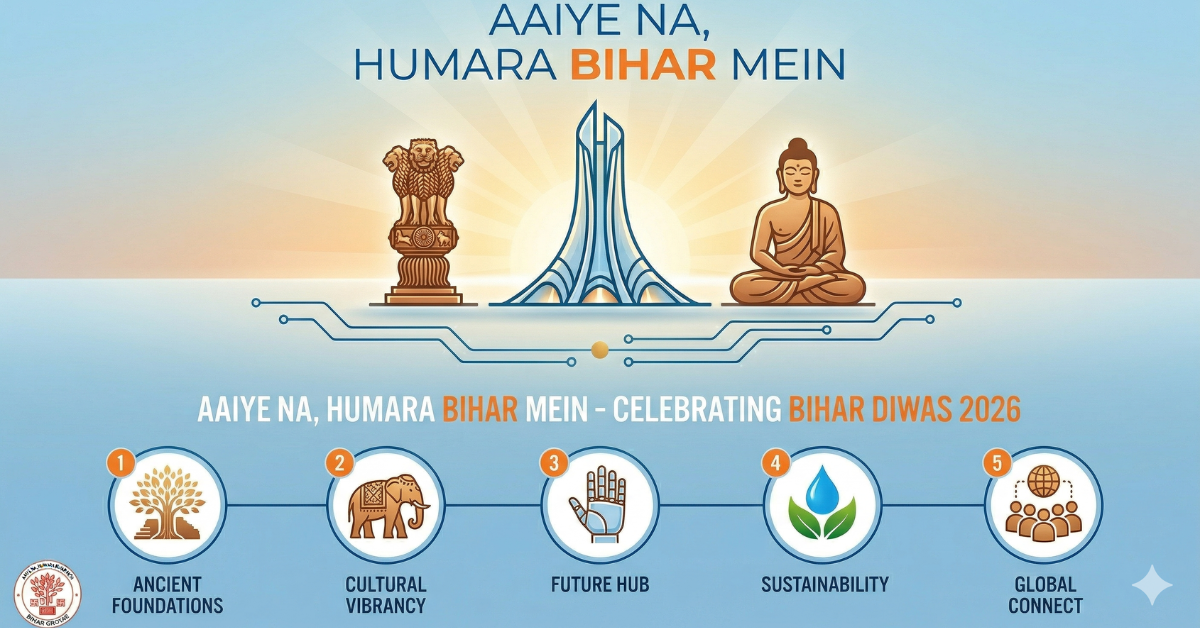
- The 2026 theme “Unnat Bihar, Ujjwal Bihar” focuses on development, technology, and sustainability.
- The day also highlights Bihar’s enduring contribution through its people across India and the world.
Bihar is observing its 114th Foundation Day today, marking the formal creation of the province in 1912. Known as Bihar Diwas, the occasion reflects not only an administrative milestone but also the deeper historical and cultural role the region has played in shaping India’s identity.
Why March 22 Is Observed as Bihar Diwas
The origins of Bihar Diwas lie in a major administrative change during British rule. Before 1912, Bihar was part of the Bengal Presidency, governed from Calcutta. Over time, local leaders argued that the region’s language, culture, and governance needs were not adequately represented.
Leaders such as Sachchidananda Sinha and Mahesh Narayan led the demand for a separate province. Their efforts resulted in an announcement at the Delhi Durbar on December 12, 1911, when King George V declared the separation of Bihar and Orissa from Bengal.
The official notification came into effect on March 22, 1912, giving Bihar its administrative identity. Odisha later became a separate state in 1936, followed by the creation of Jharkhand in 2000.
Why the Celebration Began in 2010
Despite its historical importance, Bihar Diwas was not widely celebrated for decades. It was only in 2010 that the state government initiated large-scale public observances under Chief Minister Nitish Kumar.
The move aimed to revive “Bihari Asmita,” or regional pride, and shift the narrative from migration and economic challenges to heritage and future potential. Since then, Bihar Diwas has evolved into a structured annual event.
Bihar’s Civilizational Significance
Bihar’s importance extends beyond its administrative history. The region has been central to religious, political, and educational developments over centuries.
It is associated with the origins of Buddhism and Jainism. Gautama Buddha attained enlightenment at Bodh Gaya, while Lord Mahavira was born in the region and later attained nirvana. Bihar is also the birthplace of Guru Gobind Singh, the tenth Sikh Guru.
In political history, Vaishali is considered one of the earliest known republics. The region also hosted major centers of learning such as Nalanda and Vikramshila, which attracted scholars from across Asia.
Empires such as the Mauryan and Gupta dynasties emerged from this region, shaping early Indian political and cultural structures.
Bihar Diwas 2026: Theme and Events
The 2026 celebrations are being held under the theme “Unnat Bihar, Ujjwal Bihar,” reflecting a focus on progress and development.
Gandhi Maidan in Patna serves as the main venue, featuring pavilions from various government departments. This year includes a stronger emphasis on technology, with exhibitions on artificial intelligence and robotics aimed at engaging younger audiences.
Environmental initiatives are also highlighted, particularly the Jal-Jeevan-Hariyali mission, which focuses on water conservation and sustainability.
The cultural lineup includes performances by artists such as Papon, Shaan, and Sona Mohapatra, alongside traditional music and dance. Food stalls offer regional dishes like Litti Chokha, Anarsa, Khaja, and Maner ka Laddu.
A Global Celebration
Bihar Diwas is increasingly observed beyond India. Members of the Bihari diaspora in countries such as the United States, the United Kingdom, Australia, Mauritius, and the United Arab Emirates organize cultural events on this day.
In Mauritius, where many trace their ancestry to indentured laborers from Bihar, the occasion carries strong historical and emotional meaning.
The Human Dimension of Bihar’s Contribution
Beyond its historical legacy, Bihar’s contribution is also reflected through its people. Migration has played a significant role in the state’s modern story, with individuals contributing across sectors in cities like Delhi and Mumbai.
From civil servants and professionals to workers in infrastructure and services, the role of Bihar’s workforce continues to shape India’s development.
Bihar Diwas in Today’s Context
Bihar Diwas today represents a convergence of history, identity, and policy. It serves as both a remembrance of the state’s formation and a reflection on its evolving role within India.
As celebrations take place across Patna and beyond, the day highlights a continuity that connects the region’s past with its present and future.