


FAANG at a Glance
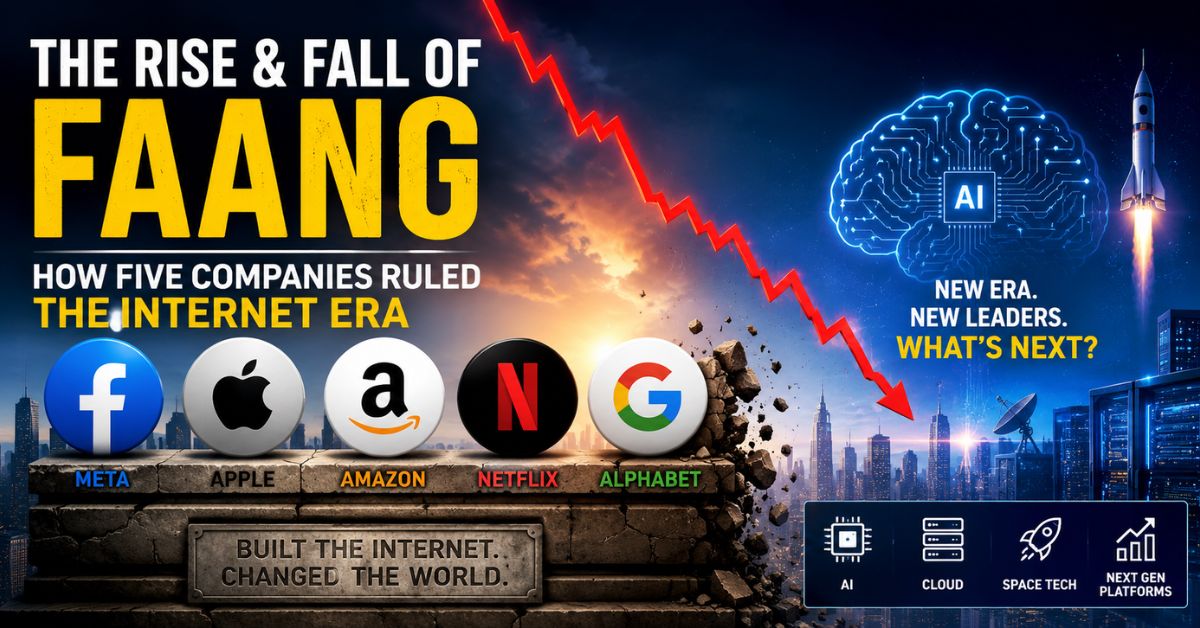
- FAANG refers to Facebook (Meta), Apple, Amazon, Netflix, and Google (Alphabet).
- The acronym became a symbol of the internet and smartphone era during the 2010s.
- Each company transformed a major industry, including social media, smartphones, e-commerce, streaming, and online search.
- Strong network effects, massive cash reserves, and top talent helped FAANG dominate global technology markets.
- The rise of artificial intelligence is creating a new technology landscape, forcing FAANG companies to adapt.
For more than a decade, a single acronym represented the power and influence of the technology industry: FAANG. The term referred to Facebook, Apple, Amazon, Netflix, and Google, five companies that transformed how people communicate, shop, work, and consume entertainment.
These businesses became symbols of the internet age. They dominated stock markets, attracted some of the world’s best engineering talent, and built products used by billions of people every day. Investors closely followed their performance, while technology startups often measured their success against them.
Today, however, the technology industry is changing. Artificial intelligence, advanced computer chips, cloud infrastructure, and next-generation computing platforms are becoming the new focus of investors and businesses. As a result, many analysts are asking whether the FAANG era that shaped the 2010s is slowly giving way to a different phase of technology leadership.
Understanding this shift requires looking back at how FAANG rose to power and why these companies became some of the most successful businesses in modern history.
How FAANG Was Created
The story of FAANG began in 2013 when financial commentator Jim Cramer introduced the term “FANG” to describe four fast-growing technology companies: Facebook, Amazon, Netflix, and Google.
At the time, these firms were growing much faster than many traditional businesses. They were expanding their user bases, increasing revenue, and reshaping industries through digital technology.
In 2017, Apple was added to the group, creating the acronym FAANG. By then, Apple had become one of the most valuable companies in the world thanks to the success of the iPhone and its growing ecosystem of digital services.
Together, these five companies came to represent the most powerful forces in technology. They operated in different industries, but they shared one important characteristic. Each company had built a platform that millions or even billions of people depended on every day.
The Internet Era Belonged to FAANG
The success of FAANG was closely linked to the growth of the internet and smartphones.
As internet access expanded around the world, people spent more time online than ever before. Social media platforms became part of daily life. Online shopping replaced visits to physical stores. Streaming services challenged traditional television. Search engines became the starting point for finding information.
FAANG companies positioned themselves at the center of these trends.
Facebook connected people through social networking. Google helped users navigate the internet. Amazon became a leading destination for online shopping. Netflix transformed entertainment through streaming. Apple created the devices that allowed people to access all these digital services.
Together, they became the foundation of the modern digital economy.
How Each FAANG Company Changed the World
| Company | Core Business | Major Impact |
|---|---|---|
| Meta (Facebook) | Social Media & Advertising | Connected billions through Facebook, Instagram, and WhatsApp |
| Apple | Consumer Hardware & Services | Made smartphones central to everyday life |
| Amazon | E-Commerce & Cloud Computing | Changed global retail and built cloud infrastructure |
| Netflix | Streaming Entertainment | Replaced traditional TV viewing habits |
| Alphabet (Google) | Search, Advertising & Digital Services | Became the gateway to online information |
Also Read: MANGOS vs FAANG
Facebook Turned Social Networking Into a Global Industry
Facebook’s rise was one of the defining business stories of the internet era.
What began as a social networking platform for college students expanded into a global communication network. Through acquisitions such as Instagram and WhatsApp, Facebook increased its reach across different audiences and regions.
The company’s business model was based largely on digital advertising. By analyzing user interests and behavior, Facebook helped advertisers target specific groups of consumers with remarkable precision.
This approach generated enormous revenue and made Facebook one of the world’s most influential technology companies.
Today, the company operates under the name Meta and is investing heavily in artificial intelligence and virtual reality technologies as it prepares for the next phase of technological change.
Apple Built One of the Strongest Ecosystems in Business History
Unlike many internet companies, Apple did not rely primarily on advertising.
Instead, it focused on creating premium hardware products that worked seamlessly with its software and services. The iPhone became one of the most successful consumer products ever created, helping Apple build a loyal customer base across the world.
The company’s ecosystem expanded beyond smartphones to include tablets, computers, smartwatches, music services, cloud storage, and digital payments.
Apple’s control over the App Store also created a powerful business model. Developers gained access to millions of customers, while Apple earned revenue from app purchases and subscriptions.
This ecosystem approach helped Apple become one of the most profitable companies in history.
Amazon Changed the Way the World Shops
Amazon started as an online bookstore in the 1990s, but it quickly expanded into nearly every retail category imaginable.
The company invested heavily in warehouses, logistics networks, and delivery systems. This allowed customers to receive products faster and often at lower prices than traditional retailers could offer.
However, Amazon’s influence extends far beyond e-commerce.
Its cloud computing division, Amazon Web Services (AWS), became a critical part of the internet’s infrastructure. Thousands of businesses, startups, and government organizations rely on AWS to store data and run applications.
For many experts, AWS may be Amazon’s most important contribution to the digital economy because it helped accelerate innovation across the technology sector.
Netflix Revolutionized Entertainment
Before Netflix, television viewers typically watched programs according to broadcast schedules or rented physical DVDs.
Netflix changed that model by allowing users to stream content on demand.
The company introduced binge-watching culture, where entire seasons of television shows could be viewed in a short period of time. It also invested billions of dollars in original programming, producing films and series that competed directly with traditional Hollywood studios.
Netflix’s success forced media companies around the world to rethink their strategies. Many launched their own streaming platforms in response, creating a highly competitive streaming market.
Although competition has increased significantly, Netflix remains one of the most recognized names in digital entertainment.
Google Became the Gateway to the Internet
Google’s influence on modern life is difficult to overstate.
For billions of people, Google Search serves as the primary way to access information online. The company also operates widely used products such as Gmail, Google Maps, Android, Chrome, and YouTube.
Its advertising business became one of the most successful in history by connecting businesses with users searching for products and services.
Google’s ability to collect, organize, and deliver information at global scale helped it become one of the most powerful technology companies ever created.
Today, through its parent company Alphabet, Google is investing heavily in artificial intelligence, cloud computing, and advanced research projects.
Why FAANG Became So Dominant
Several factors helped FAANG maintain its leadership for many years.
One of the most important advantages was network effects. As more people joined platforms like Facebook, Instagram, WhatsApp, YouTube, and Amazon, these services became more valuable to users. This made it difficult for competitors to attract customers.
Another advantage was financial strength. The companies generated billions of dollars in profit and accumulated large cash reserves. This allowed them to invest in research, acquire promising startups, and expand into new markets.
FAANG companies also attracted top talent from around the world. Engineers, designers, and business leaders often viewed employment at these firms as a career milestone.
The Challenges Facing FAANG Today
Despite their continued success, the technology landscape is becoming more competitive.
The smartphone market has matured in many regions. Digital advertising growth is no longer as explosive as it was during the early years of social media. Streaming services face increasing competition, while regulators around the world are paying closer attention to large technology companies.
At the same time, investor attention has shifted toward artificial intelligence.
The launch of advanced AI systems has created new opportunities and new competitors. Companies building AI models, specialized chips, and massive data centers are attracting significant investment and public attention.
This does not mean FAANG companies are disappearing. In fact, many of them remain leaders in AI development.
Meta has released powerful open-source AI models. Google continues to develop advanced AI systems and cloud services. Amazon is investing heavily in AI infrastructure. Apple is integrating artificial intelligence into its products and software.
However, the industry conversation is no longer centered only on social media, smartphones, online shopping, and streaming.
FAANG’s Lasting Impact on Technology
Whether or not the acronym remains popular, the influence of FAANG will be felt for decades.
These companies helped define how the internet evolved during the 2010s. They changed consumer behavior, transformed industries, and created new business models that reshaped the global economy.
The modern technology landscape would look very different without Facebook’s social networks, Apple’s smartphone ecosystem, Amazon’s cloud infrastructure, Netflix’s streaming platform, and Google’s search and advertising systems.
Even as artificial intelligence becomes the next major technology trend, the foundations built by FAANG continue to support much of the digital world.
A New Chapter for Big Tech
Technology leadership changes over time. Previous generations saw companies such as Nokia, BlackBerry, Yahoo, and AOL dominate their respective markets before newer innovations emerged.
FAANG followed a similar path, rising during the internet and smartphone revolution to become the defining group of technology companies for more than a decade.
Today, artificial intelligence is creating a new competitive landscape. Investors and industry leaders are increasingly focused on computing power, AI models, cloud infrastructure, and advanced hardware.
Yet the story of FAANG is far from over. These companies remain among the largest and most influential businesses in the world. Their products continue to serve billions of users, and many of them are actively shaping the future of artificial intelligence.
What has changed is not their importance, but the environment around them. The internet era that helped create FAANG is maturing, while a new AI-driven chapter of technology is beginning to take shape. In many ways, the future of tech will be written not only by the companies that challenge FAANG, but also by how successfully FAANG adapts to the next wave of innovation.