


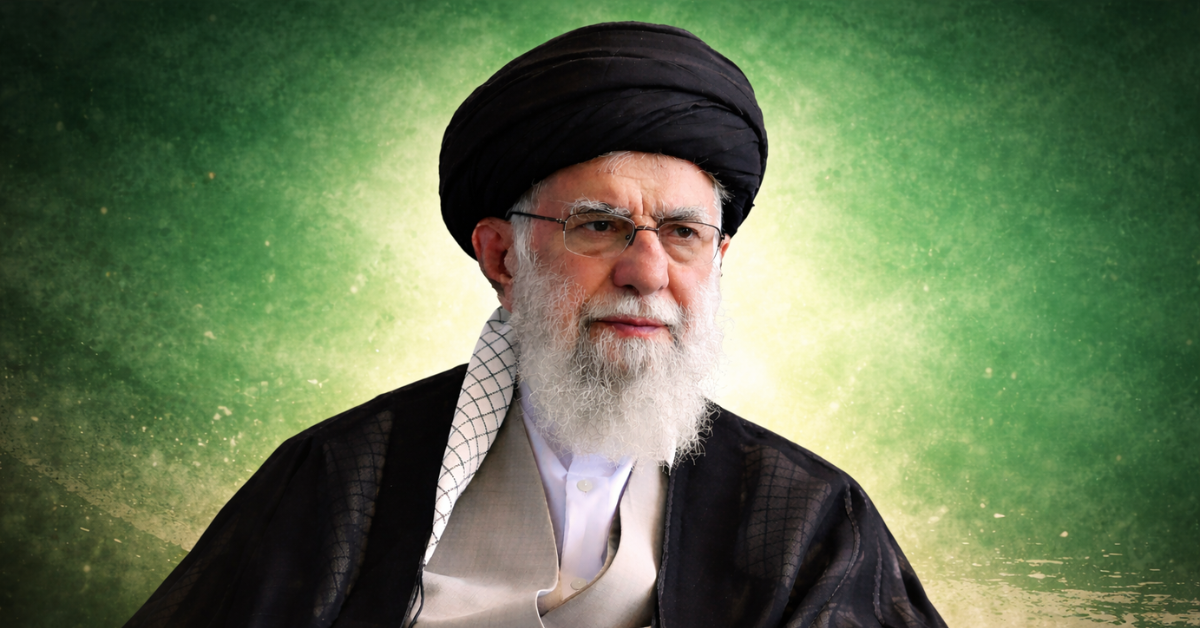
Iran’s late supreme leader Ayatollah Ali Khamenei was born on 19 April 1939 in Mashhad, Iran. Raised in a religious household, he began studying Islamic theology and jurisprudence at an early age. He later continued his education in Qom, the country’s principal center of Shia scholarship, where he studied under senior clerics involved in political opposition to the monarchy.
Family Background and Immediate Relatives
Ali Hosseini Khamenei’s father, Javad Khamenei, was a Shia cleric of Azerbaijani origin who was active in religious scholarship. His mother, Khadijeh Mirdamadi, came from a clerical family based in Mashhad. The household environment was shaped by religious study and modest living.
In 1964, he married Mansoureh Khojasteh Bagherzadeh. She has largely remained outside public political life, and limited official information is available about her activities.
The couple had six children, four sons and two daughters:
- Mostafa Khamenei
- Mojtaba Khamenei
- Masoud Khamenei
- Meysam Khamenei
- Boshra Khamenei
- Hoda Khamenei
Some of his sons have been associated with religious study and are occasionally referenced in political analysis. However, none have held the office of Supreme Leader. Under the Constitution of the Islamic Republic of Iran, succession to the position of Supreme Leader is not hereditary. The Assembly of Experts is constitutionally responsible for selecting the next leader.
His Name and Its Variations
Ali Khamenei’s full birth name is Ali Hosseini Khamenei. In Persian usage, “Ali” is his given name. “Hosseini” indicates lineage connected to the Prophet Muhammad’s grandson Husayn, a respected designation within Shia Islam. “Khamenei” refers to his family name, derived from the town of Khameneh in northwestern Iran, associated with his family’s roots.
He is commonly referred to as Ayatollah Ali Khamenei or Ayatollah Seyyed Ali Khamenei. The title “Ayatollah” denotes a high-ranking Shia cleric. The term “Seyyed” signifies claimed descent from the Prophet Muhammad through Husayn, and is used as an honorific in religious contexts.
Different spellings of his surname appear in English-language media, including Khamenei, Khamene’i, and Khamenei’i. These variations result from transliteration differences between Persian and the Latin alphabet. Despite spelling differences, they refer to the same individual.
Political Activism Before the 1979 Revolution
During the 1960s and 1970s, Khamenei became active in opposition to Shah Mohammad Reza Pahlavi. He delivered sermons criticizing the Shah’s policies and his alignment with Western governments. As a result, he was arrested several times and spent periods in prison and internal exile. These experiences strengthened his association with the clerical movement that ultimately led to the 1979 Iranian Revolution.
Role in the Islamic Revolution
Following the fall of the Pahlavi monarchy in 1979, the Islamic Republic of Iran was established under Ayatollah Ruhollah Khomeini. Khamenei assumed positions of responsibility within the new state, serving on the Revolutionary Council and becoming Tehran’s Friday Prayer leader. These roles increased his political and religious visibility during a period of institutional consolidation.
Presidency (1981–1989)
In 1981, after the removal of President Abolhassan Banisadr, Khamenei was elected President of Iran. He served two terms during the Iran–Iraq War, which lasted from 1980 to 1988. During this period, he worked closely with military and clerical leadership. He also survived an assassination attempt that left his right arm permanently impaired.
Appointment as Supreme Leader
After the death of Ayatollah Khomeini in June 1989, the Assembly of Experts selected Khamenei as the second Supreme Leader of Iran. Constitutional amendments supported his appointment. As Supreme Leader, he assumed ultimate authority over Iran’s armed forces, judiciary, state broadcasting, and key policy decisions. He appointed the head of the judiciary and half of the Guardian Council, which reviews legislation and vets electoral candidates.
Domestic Governance
During his tenure, Iran experienced alternating conservative and reformist administrations. Presidents such as Mohammad Khatami, Mahmoud Ahmadinejad, and Hassan Rouhani served under his leadership. While elections for president and parliament were held regularly, candidates required approval from supervisory institutions. This structure shaped the boundaries of political competition within the Islamic Republic.
Iran also witnessed periods of protest related to elections, economic pressures, and social issues. The state responded with a combination of security measures and policy adjustments.
Economic and Foreign Policy
International sanctions significantly affected Iran’s economy, particularly those imposed by the United States targeting oil exports and financial institutions. Khamenei promoted the concept of economic self-reliance, often described as an “economy of resistance.”
Iran’s nuclear program became a central international issue during his leadership. In 2015, Iran agreed to the Joint Comprehensive Plan of Action with global powers, accepting limits on aspects of its nuclear activities in exchange for sanctions relief. Following the withdrawal of the United States from the agreement in 2018, tensions increased and sanctions were reinstated.
Regionally, Iran expanded its influence through alliances with governments and non-state actors in Iraq, Syria, Lebanon, and Yemen. Supporters described this strategy as defensive and deterrent in nature, while critics viewed it as destabilizing.
Ideological Position
Ali Khamenei advanced and upheld the doctrine of Velayat-e Faqih, or Guardianship of the Islamic Jurist, as the central ideological foundation of Iran’s political system. Under this doctrine, ultimate political authority rests with a senior Islamic jurist who is believed to ensure governance remains compatible with Islamic law.
The idea was originally developed by Ayatollah Ruhollah Khomeini and enshrined in Iran’s 1979 constitution. As Supreme Leader, Khamenei exercised constitutional powers that included command of the armed forces, appointment of key judicial and security officials, and the authority to oversee general state policy and national security. His control extended to the Islamic Revolutionary Guard Corps and the Guardian Council, which vets candidates for elected office and reviews legislation.
Throughout his leadership, Iran pursued what supporters described as a defense strategy and what critics characterized as an expansion of influence through proxy groups in Lebanon, Syria, Iraq, and Yemen.
His government also maintained a firm posture on Iran’s right to nuclear technology, asserting that nuclear weapons were un-Islamic while pursuing enrichment programs despite international opposition.
This ideological stance shaped Iran’s domestic controls and foreign relations for decades, anchoring political legitimacy in clerical authority rather than popular electoral outcomes.
Positions and Official Roles Held
Over the course of his public life, Ali Hosseini Khamenei held a series of significant religious and political offices in the Islamic Republic of Iran. His roles reflected both his clerical standing and his central place in the country’s governing structure.
Member of Parliament
Following the 1979 revolution, Khamenei was elected to the first Islamic Consultative Assembly (Iran’s parliament) representing Tehran in 1980. His time in parliament was short, ending when he left to take up higher office.
Imam of Friday Prayer in Tehran
In January 1980, Ruhollah Khomeini appointed Khamenei as Tehran’s Friday Prayer leader, a role with both religious and political influence in the new Islamic Republic.
It placed him at the heart of political discourse and established him as a visible interpreter of the regime’s policies to the public.
Deputy at the Ministry of Defence
In July 1979, shortly after the revolution, Khamenei was appointed Deputy for Revolutionary Affairs in the Ministry of Defence.
In this role, he was involved in efforts to reorganise Iran’s military and security bodies following the revolution.
Third President of Iran
Khamenei was elected President of the Islamic Republic of Iran in October 1981, following the impeachment of President Abolhassan Banisadr. He served two consecutive terms until 1989.
As president, he led the country through much of the Iran–Iraq War and held executive responsibility for government administration under the supervision of Supreme Leader Khomeini.
Chairman of the Expediency Discernment Council
In 1988, Khamenei became Chairman of the newly established Expediency Discernment Council, a body created to resolve conflicts between parliament and the Guardian Council. He continued to chair this council into the early years of his tenure as Supreme Leader.
Second Supreme Leader of Iran
In June 1989, after the death of Ayatollah Ruhollah Khomeini, Khamenei was elected by the Assembly of Experts to be the second Supreme Leader of the Islamic Republic.
As Supreme Leader, he became the highest authority in Iran’s political system, with control over the armed forces, judiciary, media, and national policy direction. He appointed key officials, including commanders of the Islamic Revolutionary Guard Corps (IRGC) and half of the members of the Guardian Council.
Commander-in-Chief and Policy Authority
Although not a separate title, Khamenei’s role as Supreme Leader also made him commander-in-chief of all Iranian armed forces and the chief policy authority for issues ranging from foreign relations to nuclear strategy. He dictated the general policies of the state and had the constitutional power to supervise and influence elections and legislation.
Throughout his life in public office, Khamenei combined clerical leadership with political authority, shaping both the ideological and structural functions of the Islamic Republic of Iran’s government. His tenure in these positions spanned almost five decades, from the early years of the revolution to his death in 2026.
Death and Aftermath
On 28 February 2026, Ali Khamenei, then Supreme Leader of the Islamic Republic of Iran, was killed in a targeted airstrike on his Tehran compound. The strike was part of a joint military operation carried out by the forces of the United States and Israel against senior Iranian leadership targets during an escalation of hostilities known broadly as the 2026 Iran conflict.
Iranian authorities confirmed his death on 1 March 2026, and state media announced a period of national mourning. Multiple senior Iranian officials were also killed in the same series of strikes.
Khamenei was 86 years old at the time of his death. The killing of a sitting Supreme Leader — a position that held ultimate authority over Iran’s military, judiciary, and security apparatus — marked a historic turning point for the Islamic Republic, as no clear successor had been publicly designated. Following the announcement, Iran declared a 40-day mourning period and seven days of public holiday.
The constitution provides that the Assembly of Experts, a clerical body, is responsible for selecting the next Supreme Leader, and in the interim, a temporary leadership council was expected to oversee state functions. The death triggered both domestic unrest and international reactions, with profound implications for Iran’s internal stability and its regional relationships.
Legacy
Khamenei served as Supreme Leader for nearly 37 years, making him one of the longest-serving political leaders in modern Iran. His tenure spanned war, international isolation, diplomatic engagement, economic hardship, and internal dissent. His leadership shaped the institutional and ideological direction of the Islamic Republic for more than three decades.