


Zorq AI Expands as Multi-Model Creative Platform for Video, Image, and Motion Tools
- Zorq AI offers a combined suite of image, video, and motion generation tools in one interface
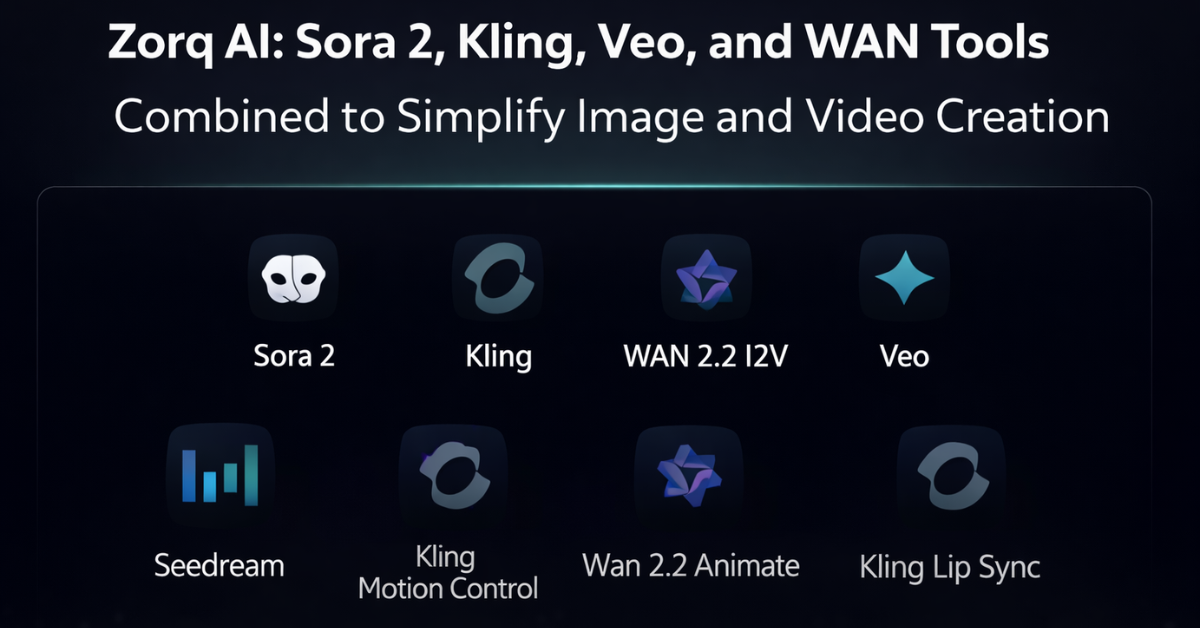
- Supported models include Seedream, Kling, WAN, Google Veo, and Sora 2
- Advanced tools focus on animation, motion control, lip sync, and video editing
- The platform targets creators, marketers, and small teams seeking fast content production
- Positioned as a workflow tool rather than a standalone AI model provider
Zorq AI is positioning itself as a multi-model creative platform by integrating a wide range of image and video generation tools into a single dashboard. The platform combines outputs from several AI systems, allowing users to generate, edit, and animate content without relying on multiple standalone applications.
Wide Range of Image and Video Models
The platform includes multiple models across image and video generation categories. For image creation, tools such as Seedream 4.0, Seedream 4.5, Nanobanana Pro, and Kling Image O1 are available, offering different styles and rendering capabilities.
On the video side, Zorq AI brings together models such as WAN 2.2 I2V, Seedance V1.5 Pro, Kling V2.6 Pro, Google Veo 3.1, and Sora 2. These tools allow users to generate video content from prompts, with varying levels of realism, motion control, and scene consistency.
Focus on Motion and Post-Generation Tools
Beyond generation, Zorq AI includes a set of advanced tools designed to refine and enhance outputs. These include MultiGen Engine for batch creation, Kling Motion Control for precise movement adjustments, WAN 2.2 Animate for animation workflows, Kling Video Edit for post-processing, and Kling Lip Sync for aligning dialogue with visuals.
This combination suggests a shift from simple prompt-based generation toward more complete production workflows within a single interface.
Who the Platform Is Designed For
Zorq AI appears to be designed primarily for individual creators, digital marketers, and small teams that require rapid content production. The ability to test multiple styles and formats quickly makes it suitable for advertising creatives, social media content, and experimental storytelling.
For these users, the platform reduces the need to manage separate subscriptions or tools, offering a more streamlined approach to content creation.
Position in the Evolving AI Tools Market
Rather than developing proprietary models, Zorq AI functions as an aggregation layer that brings together existing technologies. This approach reflects a broader trend in the AI ecosystem, where platforms focus on usability and workflow integration instead of competing directly at the model level.
As generative AI adoption grows, such multi-model environments are increasingly being used to simplify production pipelines and improve efficiency for content-driven use cases.
Current Scope and Limitations
While the platform offers a wide range of tools, there is no verified indication of exclusive access or deep integration with these models at an infrastructure level. Its role remains that of a facilitator, providing access and usability rather than ownership of underlying technologies.
This positions Zorq AI as a practical tool for content generation, though its broader industry impact remains dependent on adoption and verified partnerships.